Why is Amarone so expensive?
The drying lofts, the yield caps and the aging floors that push Amarone's price up, with the real numbers behind every bottle and what a cellar visit costs instead.
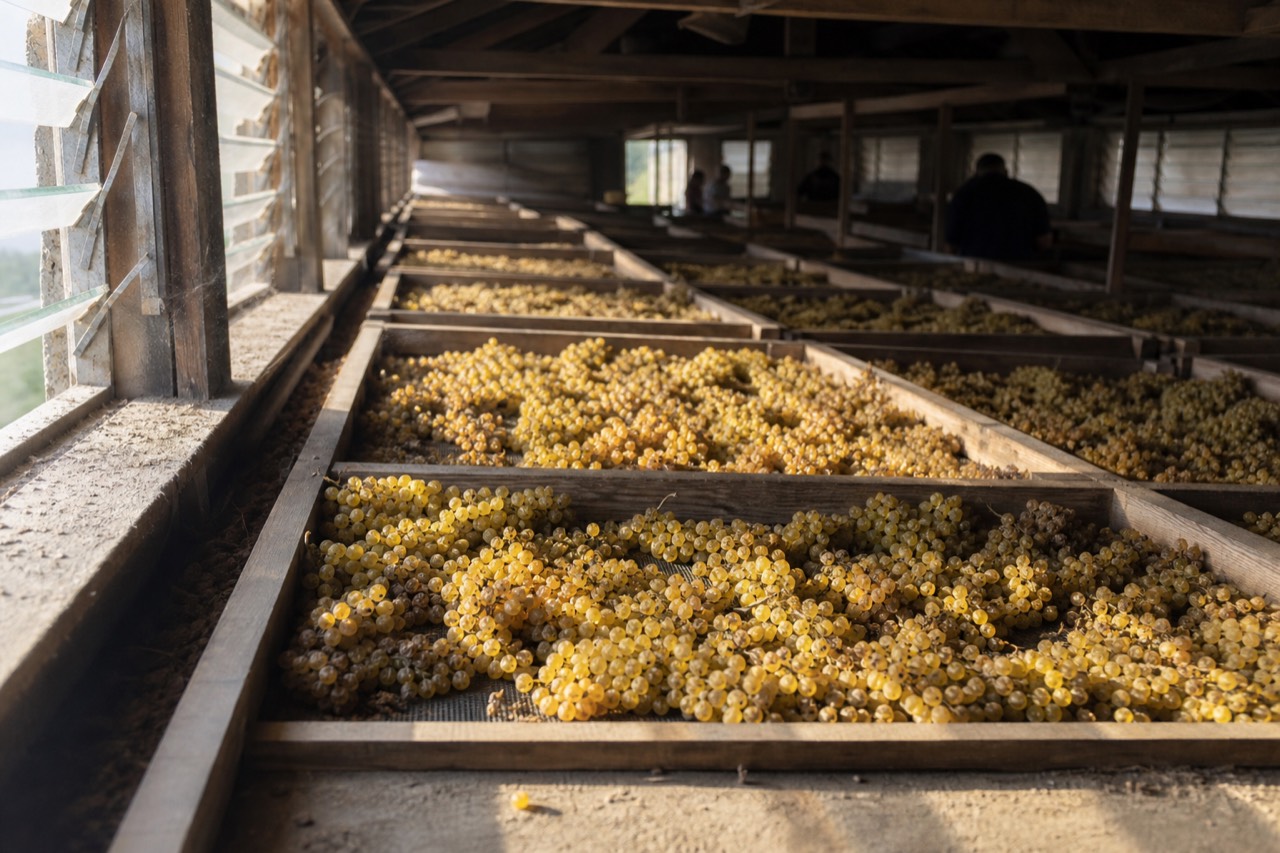
Amarone is the only mainstream Italian red that begins its life by losing weight on purpose. Producers pick their best Corvina, Corvinone and Rondinella at harvest, then leave the bunches on racks in drying lofts for about three to four months before a single drop is pressed. Everything about the price follows from that decision, and from the production rulebook that limits how much of the crop may take that route. This page works through the actual numbers, the aging floors, the Classico premium and the honest question of whether a bottle or a cellar visit is the better spend.
Why is Amarone so expensive?
Amarone is expensive because the rules force a small output from a large input: no more than 65% of the permitted 12 tonnes per hectare may be dried, the dried grapes may yield at most 40% wine by weight, and the wine cannot legally be sold after less than two years of aging, four for a Riserva. Every step removes volume and adds cost.
Start with the arithmetic. A Valpolicella vineyard is capped at 12 tonnes of grapes per hectare under the consolidated production rules, and only a portion of that crop may be earmarked for drying. The disciplinare puts the ceiling at 65% of the maximum permitted crop. Those grapes then sit in fruttaio lofts, typically into December, losing water and concentrating sugar. When they are finally pressed, the grape-to-wine yield is capped at 40%. A producer who starts with a full hectare's worth of top-quality fruit ends the process with a fraction of the wine an ordinary red would give, and has heated, ventilated and staffed the drying rooms for months to get there.
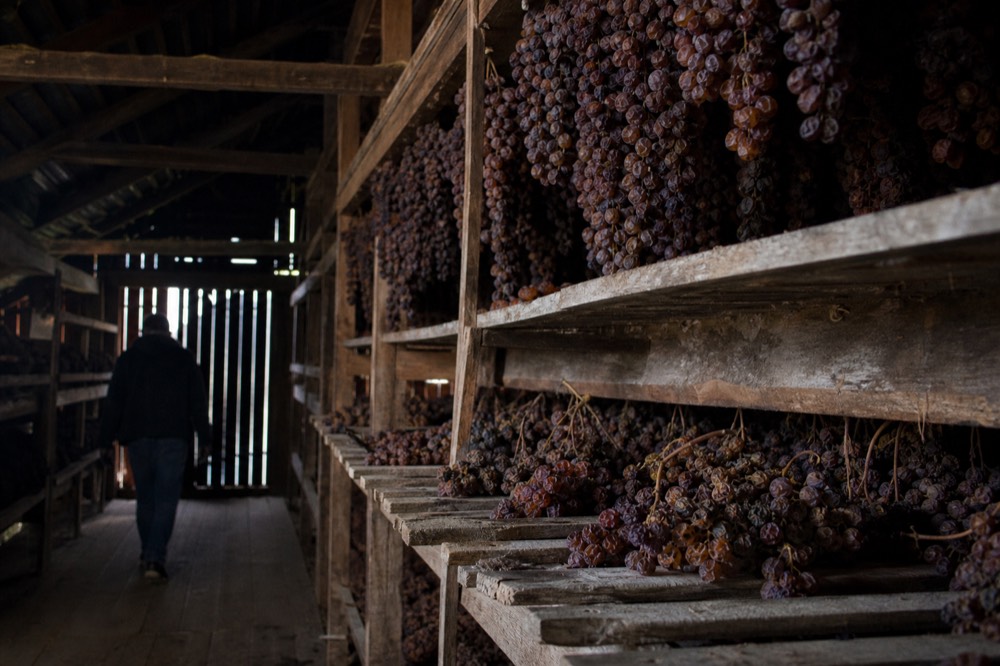
The official numbers show how sharply the funnel narrows. In the 2025 campaign the Consorzio's final figures counted 840,510 quintali of grapes harvested across the denomination, of which 327,545 quintali, well under half, were set aside for appassimento. That dried fruit produced 13.58 million bottles of Amarone and Recioto combined out of 57.5 million bottles of Valpolicella wines in total. Amarone is, by design, the small share at the top of a pyramid.
| Stage | Rule or figure | Effect on cost |
|---|---|---|
| Vineyard yield cap | 12 t/ha maximum (2026 harvest cut to 10 t/ha by regional decree) | Limits total grapes per hectare |
| Share allowed to dry | Max 65% of the permitted crop | Only the best portion can become Amarone |
| Drying period | Roughly three to four months on racks | Ventilation, space and labour for a season |
| Grape-to-wine yield | Max 40% after drying | Most of the dried weight is lost |
| Minimum aging | 2 years, Riserva 4 years | Capital locked in barrel and bottle |
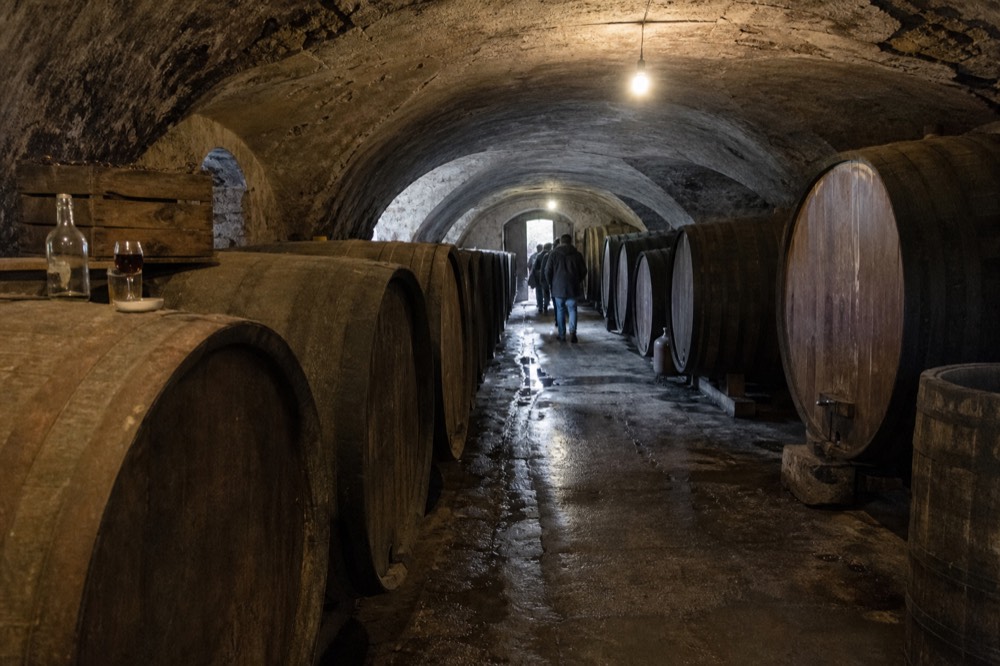
Time is the second cost. An Amarone cannot be pressed before 1 December of the harvest year under the normal rule, and it must then age for at least two years from the following 1 January, or four years for a Riserva. A producer is effectively bankrolling the wine, the barrels, the warehouse space and the drying operation for years before the first bottle earns anything back. That is why even a modest Amarone carries the price of a wine that has been occupying someone's cellar since two harvests ago.
If reading the rulebook makes you want to taste the result where it is made, the cellar-visit route is cheaper than most people expect. These three options cover the spread from a budget estate visit to a full private day:
Why is Amarone wine so expensive?
Because the rulebook compounds losses at every stage: a hectare's worth of grapes shrinks in the loft, shrinks again at the press, then sits in wood and bottle for years before it can legally be sold. The price is the sum of the lost volume, the tied-up capital and the manual handling that the drying method demands.
The manual handling deserves its own paragraph. Grapes destined for drying are picked by hand, placed in single layers in small boxes so bunches do not crush each other, and inspected as they dry, because one rotting bunch can taint a whole rack. This is not mechanised work. Compare that with ordinary Valpolicella, which is picked and pressed like any table wine, and the labour gap is obvious before a single bottle is filled. The consolidated Amarone production rules spell out the drying-room requirements, and they leave no room for shortcuts: ventilation aids are allowed, but no system that alters the traditional process.
There is also a floor under the finished wine's body. Amarone must reach a minimum of 14% alcohol by volume, which only concentrated, properly dried grapes can deliver, and the residual sugar allowance is tight enough that a wine that stops fermenting too sweet cannot be sold as Amarone at all. In other words, a producer gambles the whole vintage on the loft: dry the grapes too little and the wine lacks the required strength, dry them too much or badly and the lot is spoiled. Risk priced into a bottle is real cost, not marketing.
The story behind the wine's name is a reminder that this was originally an accident. Recioto, the sweet wine made from the same dried grapes, was the traditional product, and Amarone, "the great bitter one", was the batch that kept fermenting until dry. That history is covered in what the name Amarone actually means, and it explains why the same expensive drying process feeds two wines, one sweet and one dry.
Is Amarone an expensive wine?
Yes, by any everyday benchmark: Amarone sits well above basic Valpolicella and Ripasso, and the gap is structural rather than fashionable, because the cheaper wines in the family skip the drying loft, the 40% yield cap and most of the aging floor. Within Amarone itself, Classico-zone bottles command a further premium.
The ladder inside the Valpolicella family makes the comparison concrete. Basic Valpolicella is made from freshly pressed grapes at up to 70% yield, with no drying and no mandatory long aging, so it can be sold cheaply and still turn a profit. Ripasso takes that base wine and re-ferments it once on the skins of the dried Amarone grapes, borrowing some of the concentration at a fraction of the cost: the rules cap Ripasso volume at twice the Amarone volume produced. Amarone is the only one of the three that pays for the full process, so it is the only one that must charge for it. The differences between the styles are set out in detail in the guide to Amarone and Valpolicella side by side.
| Wine | Dried grapes | Grape-to-wine yield | Minimum aging | Relative cost |
|---|---|---|---|---|
| Valpolicella DOC | No | Up to 70% | None beyond release rules | Lowest |
| Valpolicella Ripasso DOC | Re-fermented on Amarone marc | Up to 70% base wine | Shorter maturation | Middle |
| Amarone DOCG | Yes, max 65% of crop | Max 40% | 2 years, Riserva 4 | Highest |
Then there is the Classico premium. The Classico zone covers the historic five communes, Negrar, Marano, Fumane, Sant'Ambrogio and San Pietro in Cariano, the hills where the denomination began, with the Valpantena as a separate named sub-zone. Vineyard land and older pergola-trained vines there cost more to farm, and the name on the label adds a premium on top of the process cost. A Classico bottle is not guaranteed to taste better, but it is guaranteed to cost more, and buyers should know which of the two things they are paying for.
Tasting the differences is far cheaper than buying the bottles. A structured tasting that walks the full ladder, Valpolicella, Ripasso, Amarone and Recioto, with bread, cheese and salami, runs from $105 per person (checked September 2026) on a small-group half-day with hotel pickup in Verona, and the operator notes it often sells out:
For comparison, the same ladder walked at a historic estate cellar is cheaper still. The Bertani family villa visit in Marano di Valpolicella, a sommelier-led tasting of four or six wines with a bilingual guide in a shared group, starts from $42 per person (checked September 2026), with optional cheese and charcuterie; check the listing for the pickup option, since the listing mentions pickup and drop-off without promising hotel pickup. It is the least expensive Amarone cellar visit in this set, it often sells out, and it is the natural way to see the drying lofts and barrel cellars described above without buying a single bottle.
That estate visit is also the clearest illustration of this page's whole argument. For the price of one mid-range bottle you get a sommelier, a historic cellar and four or six wines in the glass, which is why Verona Wine Tours points cost-conscious first-timers at a cellar visit before they commit to the premium bottles. If the budget stretches further and you want the day built around you, the private full-day format with a paired lunch and a minimum of two Ripasso and two Amarone in the tastings is the top of the ladder.
What is so special about Amarone wine?
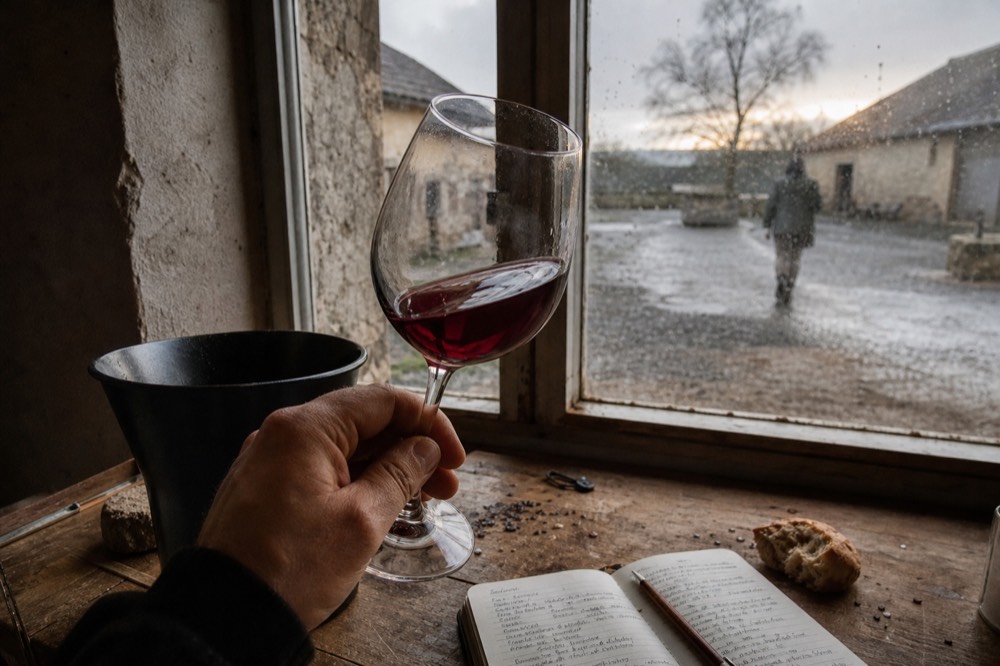
Amarone is special because it is a dry red built like a fortified wine: months of drying push the grapes past 14% potential alcohol with no added spirit, giving a wine with dried-cherry weight, bitter-almond edge and a warmth that ordinary fermentation cannot produce. No other major Italian red is required to lose so much before it earns its name.
The grape blend is its backbone. Corvina and Corvinone must make up between 45% and 95% of the blend, Rondinella between 5% and 30%, with small amounts of other Veronese reds allowed. Corvina brings the cherry fruit and the almond bitterness in the finish, Corvinone the structure and colour, and the drying process turns both into something closer to raisined intensity than fresh fruit. The result is a wine that tastes cooked without ever being cooked, sweet-fruited without being sweet, since the sugar must ferment out almost entirely for the wine to qualify as Amarone rather than Recioto.
It is also a wine built for long keeping, which shapes what you meet in the glass. The two-year minimum runs from the January after harvest, and Riserva must wait four years from the November of the harvest year, so the youngest legal Amarone on a shelf is already a couple of vintages old. Producers who age longer, in large old casks in the Veronese tradition, tie up capital further still. The full picture of the style, its history and its taste profile is in the complete guide to Amarone wine.
None of this is secret, which is the honest answer to the specialness question. The special thing is that the rulebook makes the expensive method compulsory. A producer cannot legally make Amarone from undried grapes, from an oversize crop, or with a short cellar stay, and the denomination's control bodies police those limits. When you pay for a bottle, you are paying for a process that has to happen, not a story that a marketing department chose.
How much is a bottle of Amarone della Valpolicella?
Bottle prices vary widely and this site does not quote retail shelves, but the cost structure is fixed: expect basic Amarone to sit well above everyday Valpolicella, Classico and named-vineyard bottles higher again, and estate vertical tastings of aged Amarone reaching 120 to 180 euro per person at the winery (checked September 2026). A cellar visit is often the cheaper way to taste the top tier.
The estate-visit ladder shows the spread at the source. Tommasi in Pedemonte publishes a tasting ladder from 25 to 120 euro per person, the top rung being a vertical Amarone with chocolate (checked September 2026). Tedeschi, also in Pedemonte, charges 28 euro for a one-hour visit and tasting, 45 for a cru tasting, 100 for the three-hour Fabriseria tour and 180 for a vertical of Amarone with labels aged over twenty years, prepaid with a full refund up to 48 hours before (checked September 2026). Bertani's Valpolicella Classica experience runs about two hours for up to eight people at 70 euro, booked Wednesday to Saturday (checked September 2026). These are the estates' own published figures, and they bracket the general range for the denomination: a standard cellar tour with tasting usually runs about 25 to 80 euro, with premium, vertical and lunch formats at 100 to 150.
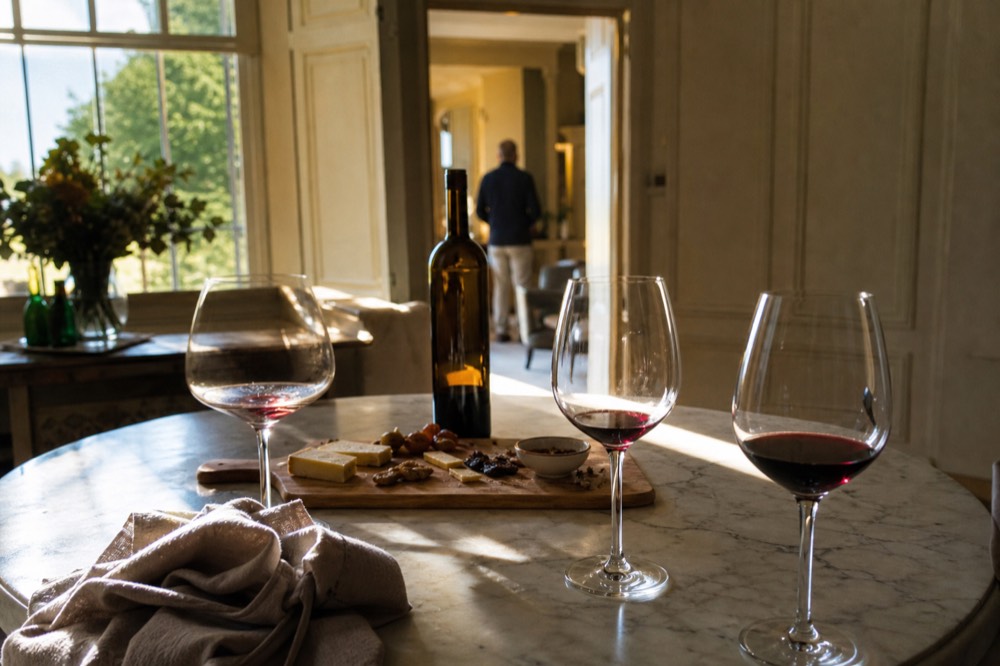
Set that against the bottle question and the logic flips for many visitors. A single high-end Amarone bottle can cost as much as a guided tasting of several wines at the estate that made it, and the visit includes the cellar, the explanation and the drive. The published estate fees above are per person for multiple wines; a bottle drunk at home is one wine, no cellar, no context. That is not an argument against buying bottles, it is an argument for deciding what you are actually paying for: the liquid, or the understanding of it.
| Way to taste Amarone | Typical cost | What you get |
|---|---|---|
| Estate cellar tour and tasting | About 25-80 euro per person (checked September 2026) | Several wines, cellar visit, producer context |
| Premium, vertical or lunch format | About 100-150 euro per person (checked September 2026) | Aged and single-vineyard Amarone, food pairing |
| Small-group tasting tour from Verona | From $105 per person (checked September 2026) | The four-style ladder, transport and hotel pickup |
| Historic-estate cellar visit | From $42 per person (checked September 2026) | Sommelier-led tasting at a Bertani family villa |
For a full private day the ceiling rises steeply. A private full-day Valpolicella tour with a minimum of two Ripasso and two Amarone in the tastings and a full paired lunch is a newer private listing, from around $419, with the live listing carrying the current figure and whether it is per person or per group (checked September 2026). At the very top, an eight-hour Amarone day with hotel pickup from Venice, Padua or Verona, two cantina visits and a trattoria lunch runs from $632 per person (checked September 2026). Those prices are not padded: they buy exclusive transport, private guiding and the full premium tier of tastings, and they show how far the format scales from the $42 estate visit.
Whether a bottle or a visit is the better spend depends on the trip, but the economics of the visit are hard to beat on a first encounter with the wine:
Amarone costs what the rulebook makes it cost: at most 65% of a capped crop may be dried, the dried grapes yield no more than 40% wine, and the wine must age at least two years, four for a Riserva. Below are the short answers to the questions buyers ask most, from how Amarone compares with other Italian reds to what a bottle or a cellar visit should cost.
Common questions about Amarone prices
Why is Amarone so expensive?
Because the rules require it: only up to 65% of the capped crop may be dried, the dried grapes yield at most 40% wine by weight, and the wine must age at least two years, four for Riserva, before sale. Small output, months of drying labour and years of tied-up capital all land in the price.
Why is Amarone wine so expensive compared with other Italian reds?
Most Italian reds are pressed fresh and released young. Amarone's grapes dry for about three to four months, shrinking the harvest, then ferment to a minimum of 14% alcohol and age for years. Few other denominations mandate losses at so many stages, so few carry the same cost floor.
Is Amarone an expensive wine?
Yes, it sits at the top of the Valpolicella family, above Valpolicella DOC and Ripasso, and Classico-zone bottles carry a further premium. The gap is structural: the cheaper wines skip the drying loft, the 40% yield cap and most of the aging floor.
What is so special about Amarone wine?
It is a dry red built like a fortified wine: drying concentrates the Corvina and Corvinone past 14% potential alcohol with no added spirit, giving dried-cherry weight and a bitter-almond finish. The rulebook makes the expensive method compulsory, so the character cannot be faked cheaply.
How much is a bottle of Amarone della Valpolicella?
Retail bottle prices vary widely by producer, zone and vintage, so check the shelf. At the winery, estate tastings run about 25 to 80 euro per person, with premium and vertical formats at 100 to 150 (checked September 2026), which is often the cheaper way to taste the top tier.