Amarone Wine: Valpolicella's Dried-Grape Red Explained
Amarone is the dried-grape red of Valpolicella, and nearly everything about it, from the December pressing rule to the four-year Riserva, is written into the DOCG regulations.
Short answer
Amarone della Valpolicella is a dry red DOCG made from Corvina, Corvinone and Rondinella grapes dried for about three to four months before pressing, which cannot happen before 1 December. It must age at least two years, reach 14% alcohol and yield no more than 40% wine from the dried grapes.
What is Amarone wine?
Amarone della Valpolicella is a dry red DOCG from the hills north-west of Verona, made from grapes that are dried on racks for about three to four months before fermentation. The grape blend is Corvina and/or Corvinone between 45% and 95%, with Rondinella between 5% and 30%, and the wine must reach at least 14% alcohol and age a minimum of two years.
The name points at its own history. Recioto, the sweet wine of the same dried grapes, was the traditional product of Valpolicella, and Amarone began as the batch that kept fermenting until every gram of sugar was gone: the "great bitter one", amarone, in contrast to the sweet original. That accident became a style, and the style became the region's flagship, sold in more than 80 countries today.
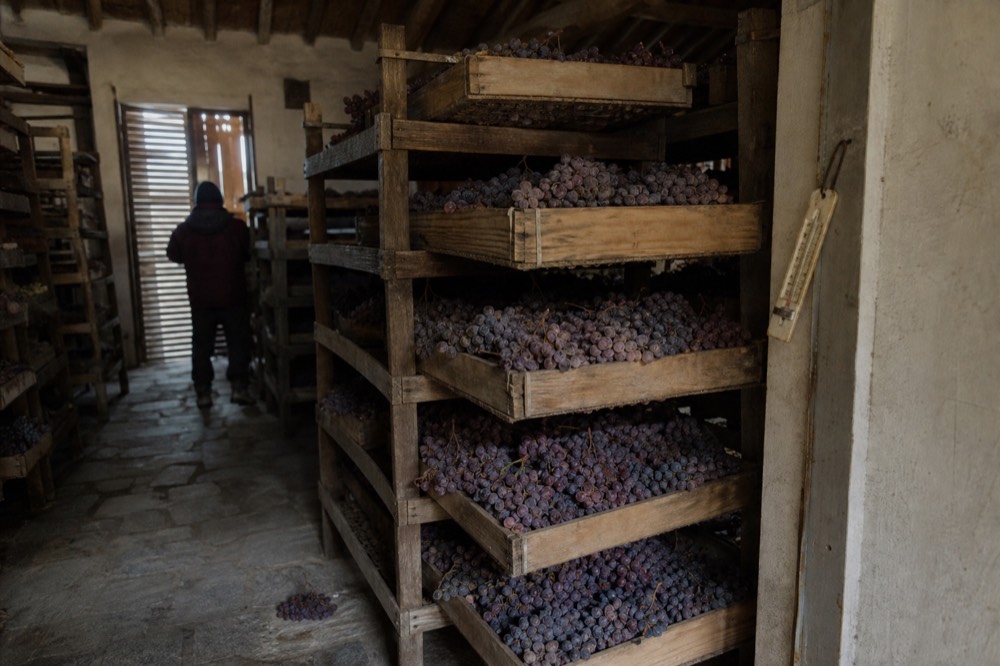
What separates Amarone from almost every other dry red is the drying step, appassimento. Grapes are picked at normal harvest time, then laid out in ventilated lofts called fruttaio, where they lose water and concentrate sugar, acids and aromas until they are almost raisins. The rules allow no more than 65% of the permitted 12 tonnes per hectare crop to be set aside for drying, which caps production by design.
The result is a wine of unusual weight for a cool-climate region: deep, warm, cherry-and-spice driven, with the dried-fruit character that only appassimento gives. It is also a wine that behaves differently in the glass than most of its neighbours. Where a young Valpolicella is light and best slightly cool, Amarone wants room temperature, a big glass and time, and it opens over an hour the way some structured reds do.
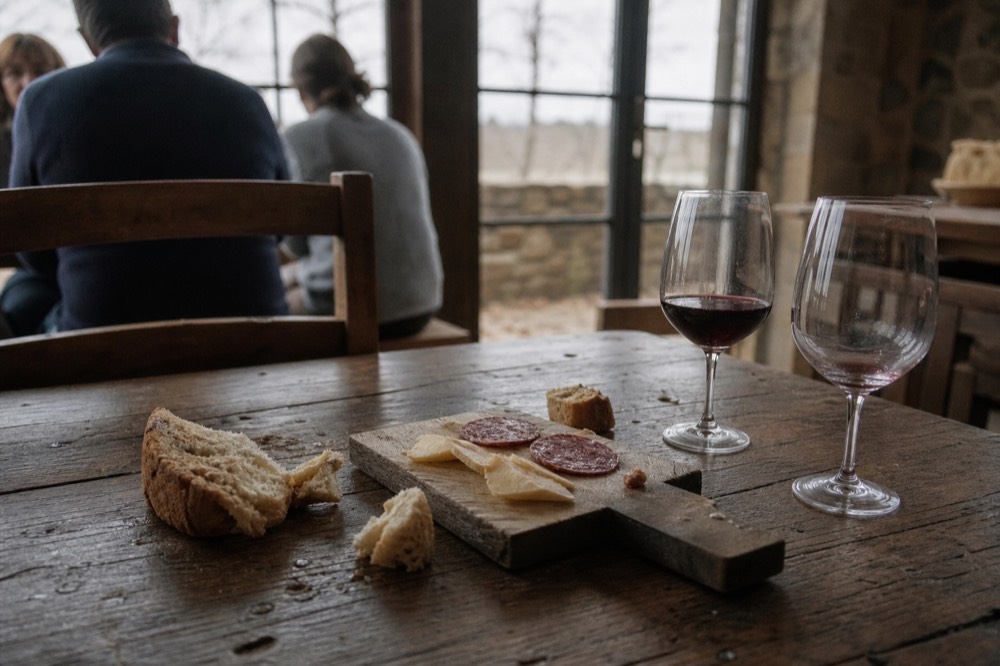
Food is part of the style's identity too. The wine's weight and slight bitterness were made for the cured meats, aged cheeses and slow-cooked beef of the Veronese table, and an Amarone poured against a delicate fish dish will flatten it. That is why most tastings in Valpolicella come with cheese, salami and bread rather than nothing at all.
Our guide to Valpolicella wines covers the lighter end of the family, and the Ripasso and Recioto guide explains the two wines most closely related to Amarone.
How is Amarone made: the appassimento process?
Grapes are picked in the usual September-to-October window, then dried on racks or in plastic crates in ventilated rooms for roughly 100 to 120 days. Pressing cannot legally happen before 1 December of the harvest year. Fermentation of the shrunken, sugar-rich berries is slow, and the finished wine must yield no more than 40% of the weight of the dried grapes.
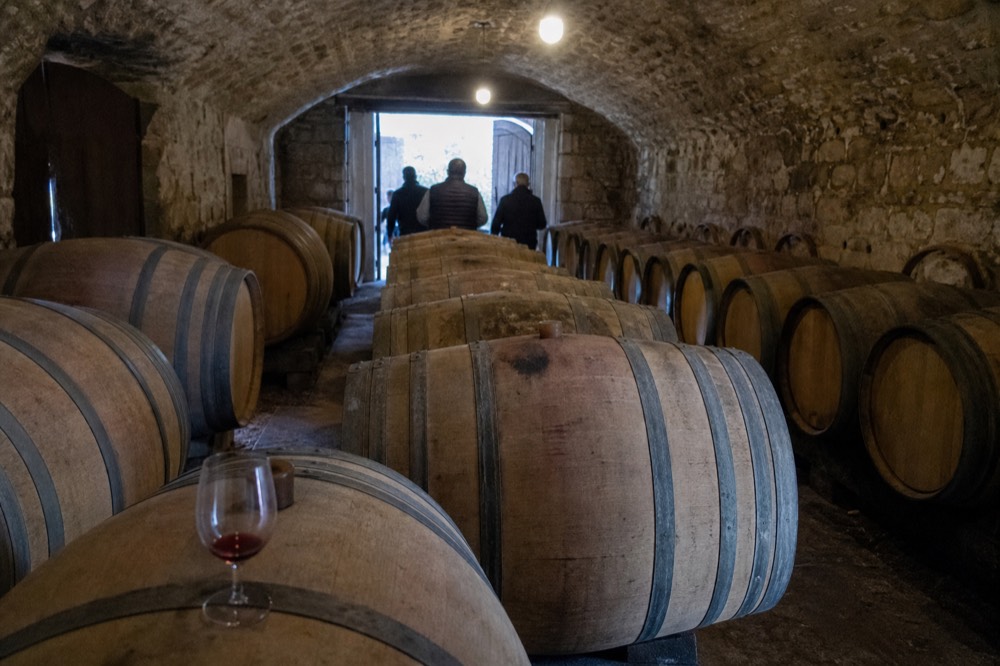
The drying rooms do the work. Bunches are laid out so air can move around them, and ventilation is allowed to help, but the regulations forbid any system that alters the traditional process: no forcing, no shortcuts. Botrytis and rot are the enemy, which is why the permitted varieties are the ones with loose bunches and thick skins, Corvina, Corvinone and Rondinella above all.
By the time pressing comes, the grapes have lost a large share of their water and gained concentration in everything else. Fermenting that material to complete dryness takes weeks, and the high alcohol of the finished wine, 14% at minimum, is a direct consequence of the sugar the drying concentrated. The consolidated production rules published by the Italian agriculture ministry set every number in this paragraph.
The economics of the loft explain much of what follows in this article. Drying space is expensive, finite and needed for months, and every kilogram of grapes sitting on a rack is capital tied up until the wine is sold years later. Add the two-year minimum aging before release, four for Riserva, and a producer's cash cycle stretches from harvest to well past the next two harvests. That is the machinery behind the price tag, and it is also why the denomination's total output stays modest relative to the vineyard area it sits on.
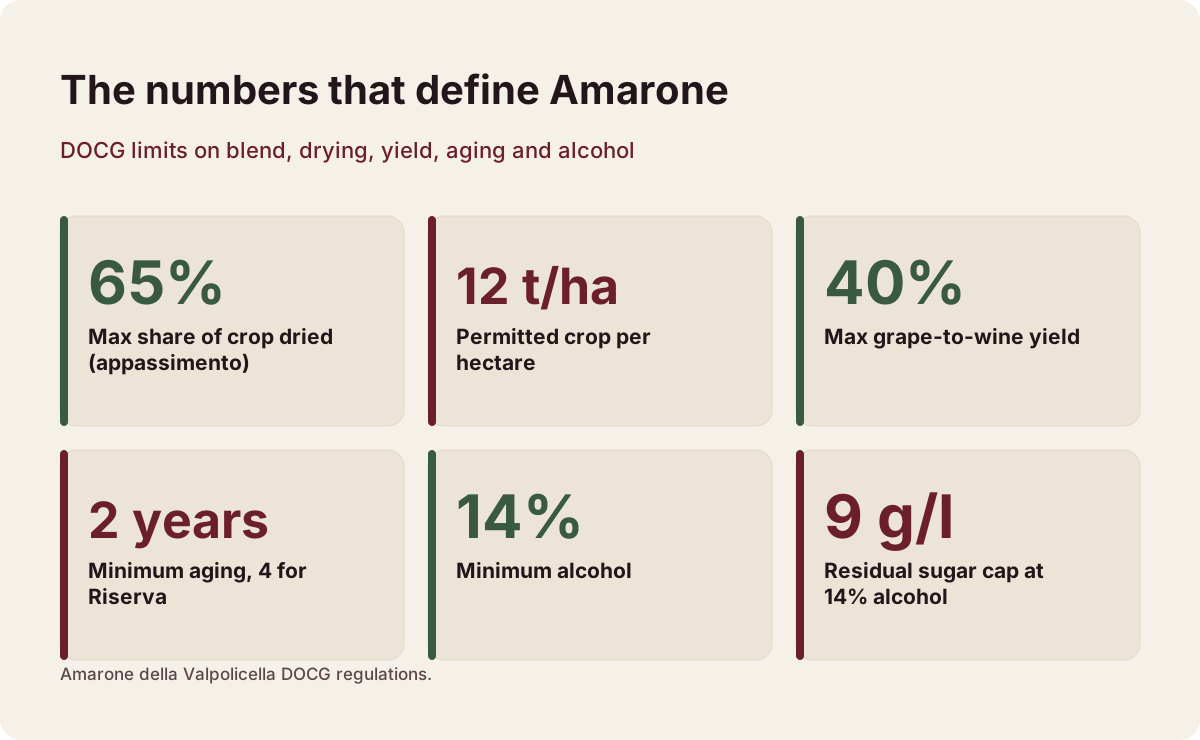
Reading the numbers side by side explains the price. A hectare that yields 12 tonnes of grapes can send at most 65% to the drying lofts, and those dried grapes can give back no more than 40% of their weight as wine. Every bottle starts as several times its own weight in fresh fruit, plus months of loft space, plus years of barrel and bottle time before release.
If you want to see the lofts and the barrels rather than just read about them, a guided outing is the practical route, and these three cover the ground at different price points.
What rules does the Amarone DOCG impose?
The DOCG sets a minimum of two years aging from 1 January after the harvest, four years from 1 November of the harvest year for Riserva, minimum 14% alcohol, and a residual-sugar cap of 9 g/l at 14% alcohol. Grape composition is Corvina/Corvinone 45-95% and Rondinella 5-30%, with other permitted red varieties capped at 25% of the blend.
| Rule | Requirement |
|---|---|
| Grape blend | Corvina and/or Corvinone 45-95%, Rondinella 5-30%, other permitted reds max 25% total |
| Drying cap | Max 65% of the 12 t/ha crop may be set aside for appassimento |
| Earliest pressing | Not before 1 December of the harvest year (the Region may authorise earlier in exceptional climate years) |
| Grape-to-wine yield | Max 40% |
| Minimum aging | 2 years from 1 January after harvest; Riserva 4 years from 1 November of the harvest year |
| Minimum alcohol | 14% vol |
| Residual sugar | Max 9 g/l at 14% vol, with a sliding allowance above |
The 1 December rule deserves a note. It exists to guarantee that drying actually happened, because grapes pressed in October cannot have lost the water the style requires. The rule also allows the Veneto Region to authorise an earlier start in exceptional climate years, and it did exactly that for the 2025 harvest, so the December date is a floor, not a superstition.
The residual-sugar cap is what makes Amarone officially a dry wine despite its dried-fruit sweetness. Above 14% alcohol the allowance rises slightly, which is why some bottles read 15% or 16% and still taste round: the law anticipates that concentration. Recioto, the sweet sibling, is the same grapes and the same drying with fermentation stopped early, and the Ripasso and Recioto guide covers that fork in the road.
One more rule shapes what you will actually taste on a visit. The permitted blend leaves room for small percentages of other non-aromatic red varieties of the Verona province, up to 25% of the total, which is why two Amarones from neighbouring hills can taste noticeably different even when the headline grapes are the same. Producers treat those supporting varieties, and the choice of vineyard sites within the blend, as their signature.
Does Classico matter for Amarone?
Yes, in a specific way: the Classico zone covers the five historic communes of Negrar, Marano di Valpolicella, Fumane, Sant'Ambrogio di Valpolicella and San Pietro in Cariano, the steepest, oldest hill country of the denomination. Valpantena is a separately named sub-zone, and everything outside these areas is plain Amarone della Valpolicella.
| Zone | Communes | Drive from central Verona |
|---|---|---|
| Classico | Negrar, Marano, Fumane, Sant'Ambrogio, San Pietro in Cariano | 14-23 km, about 20-26 min |
| Valpantena (named sub-zone) | The valley north-east of the city | Within the denomination's outer zone |
| Rest of the DOCG | The expanded outer zone | Variable |
Classico is not a quality guarantee on the label the way it can be in some denominations, but the hills there are where the historic estates cluster, and most of the famous names in the producer table below farm in those five communes. The drive times are short: Negrar is 14 km and about 20 minutes from central Verona, San Pietro in Cariano 15 km, Marano 18 km, Fumane 23 km. You can sleep in the city and be in a drying loft before lunch.
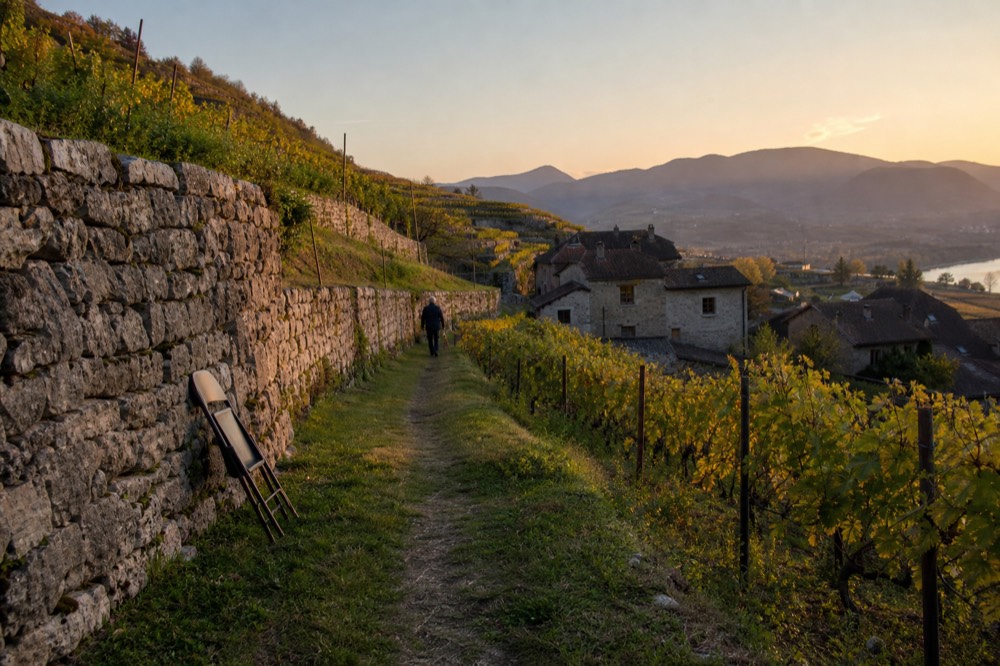
The distinction matters most when you are choosing between a Classico-hills visit and a cheaper tasting on the flat outer zone. The outer zone makes perfectly good wine, and some large producers base themselves there, but the historic cellar buildings, the terraced vineyards and the postcard hills are Classico, and the drive up from the plain is part of what people come to see. If your time is limited to one outing, the Classico communes deliver the scenery and the history along with the wine.
Which producers should you know?
The producer landscape runs from benchmark artisan estates such as Quintarelli and Dal Forno, which have no walk-in visitor programme, through historic houses like Bertani, Masi, Allegrini, Tommasi and Zenato, all of which run booked visits and tastings. Fees at the visited estates run from about EUR 25 to EUR 80 for a standard cellar tour and tasting (checked September 2026), with vertical and lunch formats up to about EUR 150.
| Producer | Base | Visitor programme | Standard tasting fee |
|---|---|---|---|
| Quintarelli | Negrar | No public walk-in visits | Not applicable |
| Dal Forno | Val d'Illasi | No public walk-in visits | Not applicable |
| Bertani | Grezzana | Booked visits, Wed-Sat, max 8 people | EUR 70, about 2 hours (checked September 2026) |
| Masi | Multiple estates | Booked visits | EUR 45-60 (checked September 2026) |
| Allegrini | Valpolicella Classica | Hospitality programme, no public price list | On request |
| Tommasi | Pedemonte | Booked visits | EUR 25-120 ladder (checked September 2026) |
| Zenato | Peschiera | Booked visits | EUR 40-80 (checked September 2026) |
| Tedeschi | Pedemonte | Booked visits, prepaid | EUR 28-180 (checked September 2026) |
The two top names need a caveat that surprises people. Quintarelli and Dal Forno, the estates that collectors chase, do not run an ordinary walk-in tasting room, so a Valpolicella trip built around visiting them specifically will not work. The estates you can reliably visit, Bertani, Tommasi, Tedeschi, Zenato, Masi, are themselves historic and serious, and several publish their menus and prices openly.
Booking is the norm everywhere. Reservation is required for any guided visit, most estates work Monday to Saturday, and Sunday visits are uncommon, so plan a Valpolicella day for a weekday if you can. Cancellation terms vary too: Tedeschi, for instance, requires advance payment but refunds in full up to 48 hours before the visit, so read the conditions when you book rather than assuming.
A useful way to read the fee ladder is to match the format to your interest. The EUR 25-40 tier is a cellar walk and a short tasting, enough to understand the style; the EUR 40-80 tier adds older wines, single-vineyard pours and a proper platter; the EUR 100-180 formats are verticals and long tours for people who already know they love Amarone. First-time visitors rarely need the top tier, and the mid tier is where most people get the most out of a visit.
How do you taste Amarone where it is made?
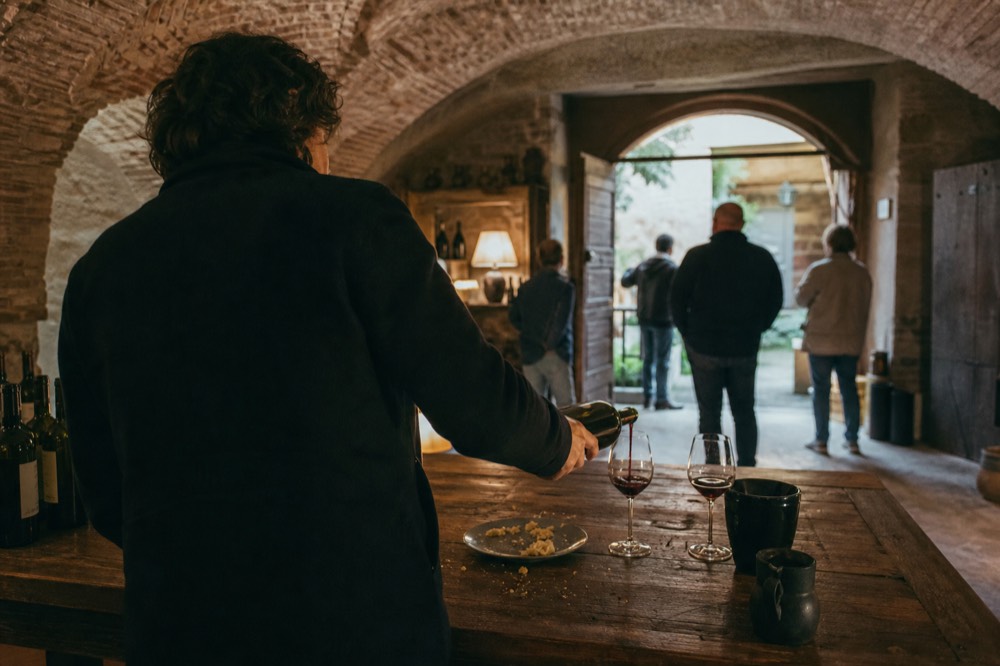
The most efficient route from Verona is a small-group half-day with transport and two winery visits, such as the Amarone tasting tour from Verona, from $145 per person (checked September 2026), rated 4.9 across over 760 reviews, with hotel pickup in the city and tastings including Amarone and Ripasso. It often sells out, so book ahead.
That tour is the default recommendation for a first Valpolicella day because it solves the two real logistics problems: the wineries are scattered across hill roads that are slow by car, and the tastings are generous enough that driving yourself is a poor idea. Italy's general blood-alcohol limit is 0.5 g/l, with a zero limit for drivers under 21 and in the first three years of a licence, and a full Amarone tasting can put a driver well past the lower band. A tour with pickup, or a taxi, removes the question entirely.
If your priority is a historic cellar rather than a multi-stop day, the Amarone chateau tour at a Bertani family villa in Marano di Valpolicella is the cheapest Amarone cellar visit in our roster, from $42 (checked September 2026), rated 4.6 across 205 reviews, with a sommelier-led tasting of four or six wines in a shared group. The listing mentions pickup and drop-off, so check the listing for the pickup option rather than assuming hotel pickup. It often sells out too.
Can you do an Amarone day from Venice?
Yes. An 8-hour Amarone tour with hotel pickup from Venice, Padua or Verona runs from $632 per person (checked September 2026), rated 5.0 across 37 reviews, and covers two cantina visits, five Valpolicella wines paired with cheese and a light trattoria lunch. It is the premium option in the region, and the price reflects a full private-style day with long transfers.
The Venice-based traveller has a genuine choice to make. A high-speed train covers Venice to Verona in about 70 minutes, so a cheaper plan is to ride the train, join a Verona-departing half-day, and be back for dinner, at roughly a quarter of the cost (see Is there a train from Verona to Lake Garda?). The full-day from-Venice product buys door-to-door pickup, two cellars and a seated lunch, and suits travellers who want the day handled end to end rather than the lowest price.
When is the best time to see the Amarone process?
The drying lofts are at their most photogenic from late September through November, when the freshly picked grapes are on the racks. Harvest itself usually runs mid-September to early October, and by December the lofts empty as pressing begins, so autumn is the season to see appassimento in progress.
The 2026 harvest made the early side of that window. Picking in Valpolicella began about two weeks earlier than the historical average because of summer heat and drought, with Corvina already coming in during late August. The Veneto Region also cut the 2026 yield cap to 10 tonnes per hectare, below the 12 in the production rules, and capped how much fruit could be dried, so the 2026 vintage is deliberately smaller.
Quality prospects for 2026 were reported as favourable, especially from older pergola-trained vines and irrigated plots, which is the kind of detail that matters if you are buying futures or simply choosing which vintage to taste on a visit. Grape prices, by contrast, were under pressure in 2026, with opening quotes for Amarone-destined fruit below what the growers' representatives had called for, a reminder that the denomination's economics are not always as rosy as its reputation.
Visiting in September or October means harvest action and full lofts; visiting in January or February means tasting the new vintage's progress at Amarone Opera Prima, the annual event where producers present a mature vintage, usually late January or early February. Both are good; only one smells of fermenting grapes.
How should you plan an Amarone tasting day?
Pick one base, Verona for most travellers, book either a guided half-day or a direct cellar appointment, and keep the day to two tastings at most. Standard cellar visits run about EUR 25-80 per person (checked September 2026), so two booked visits plus a lunch is a full and expensive enough day without cramming in a third stop.
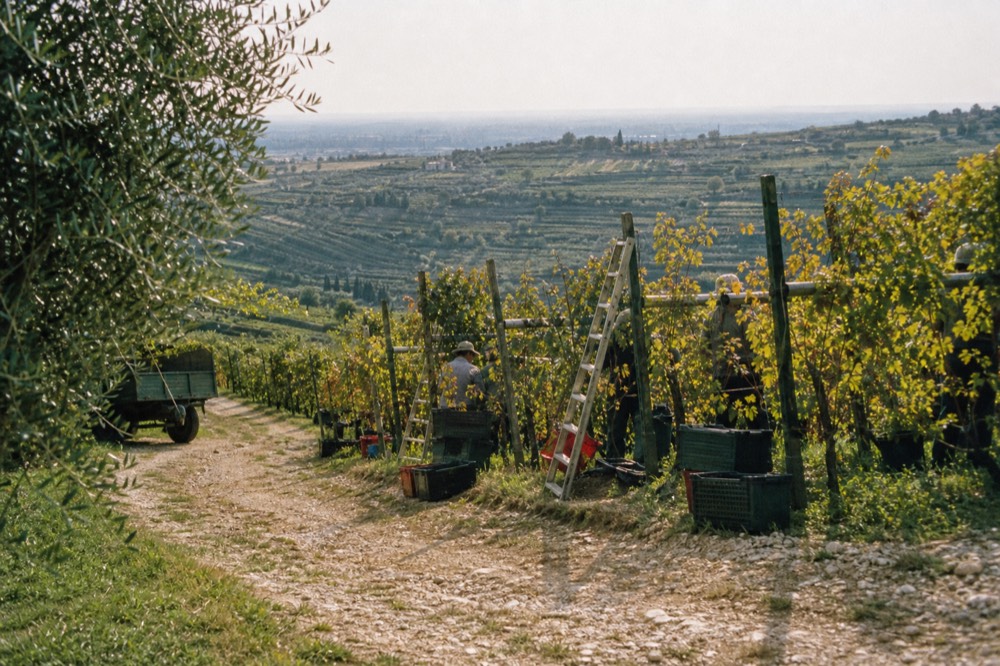
A practical shape: a morning cellar visit in the Classico hills, a long agriturismo lunch, and an afternoon visit in the same valley rather than crossing the denomination. The distances are short, Negrar to Fumane is a few minutes on hill roads, but the tastings are generous and the roads are slow, and a schedule that assumes Verona-to-Bardolino speed will fail in Valpolicella.
Season and weekday both matter more than most first-time visitors expect. Autumn gives you the lofts and the harvest colour but also the busiest tasting rooms; weekdays give you smaller groups and more time with the host; and any visit during the harvest itself should be booked further ahead than usual, because the people who would normally pour your wine are out in the vineyard or up in the loft until dusk.
For travellers who want the whole picture rather than one cellar, Verona Wine Tours exists to sort exactly this: which tours cover which valleys, what each costs, and which ones depart from where you are actually staying. The Valpolicella wine tour guide lays out the full- and half-day options across the region.
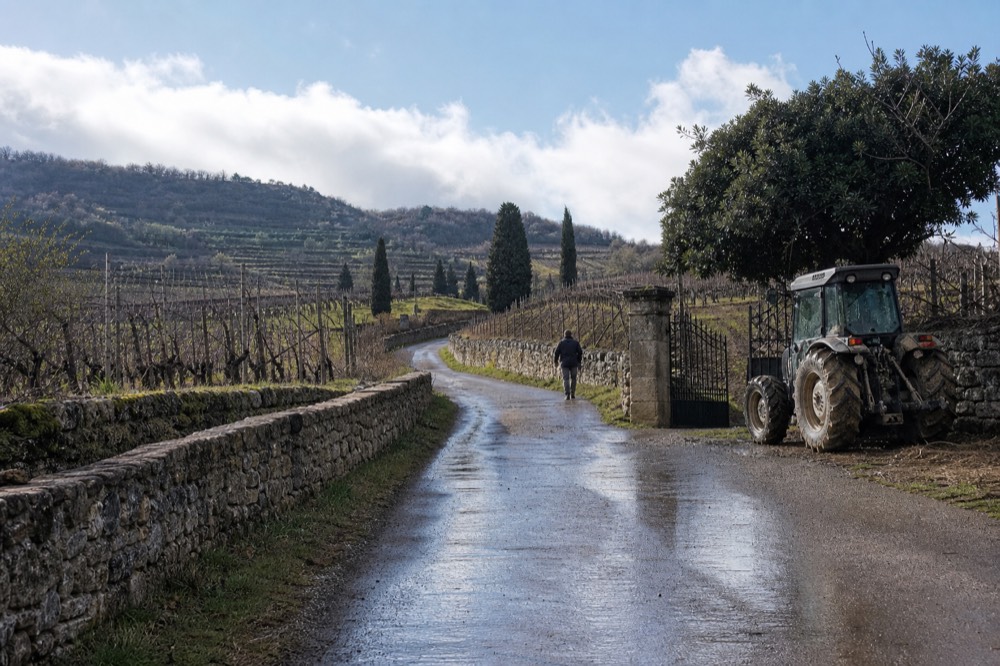
Whichever format you choose, these are the three Amarone experiences worth comparing first.
Amarone is a dry, dried-grape red DOCG from Valpolicella: Corvina, Corvinone and Rondinella grapes are dried for about three to four months, pressed no earlier than 1 December, fermented to dryness, and aged at least two years at a minimum of 14% alcohol. The questions below cover the details people ask about most.
Common questions about Amarone wine
What is Amarone wine?
A dry red DOCG from Valpolicella made from Corvina, Corvinone and Rondinella grapes that are dried for about three to four months before pressing. It must reach at least 14% alcohol and age a minimum of two years, four for Riserva.
Why are the grapes dried before fermentation?
Drying, appassimento, concentrates sugar, acids and aromas as the grapes lose water, which gives Amarone its weight and dried-fruit character. The rules allow no more than 65% of the permitted crop to be dried, and pressing cannot happen before 1 December.
What does Amarone mean in Italian?
Roughly "the great bitter one". It refers to the batch of traditionally sweet Recioto that fermented all the way to dryness, which early drinkers experienced as a bitter version of the wine they knew.
Is Amarone the same as Valpolicella?
No. Valpolicella is the light, fresh red made from the same grapes without drying; Amarone is the concentrated, long-aged flagship of the same denomination. Ripasso sits in between, a Valpolicella re-fermented on Amarone marc.
Can you visit Quintarelli or Dal Forno?
Not through a public walk-in programme. Neither estate runs ordinary visitor tastings, so plan around the historic houses that do, such as Bertani, Tommasi, Tedeschi, Zenato and Masi, all of which take booked visits.
How much does an Amarone cellar visit cost?
Standard cellar tour and tasting fees run about EUR 25-80 per person (checked September 2026), with vertical and lunch formats up to about EUR 150. Reservation is required almost everywhere, and most estates work Monday to Saturday.