Amarone Wineries to Visit: Estates, Cellar Tours and Tasting Fees
Amarone is made in a small strip of hills north-west of Verona, and only some of the estates there open their doors to visitors. This guide covers the wineries with published visit programmes, what they charge, when the drying lofts are at their most dramatic, and how to plan a day around them.
Short answer
Six named Valpolicella estates publish visitor menus: Tommasi, Zenato, Bertani, Tedeschi, Masi and Speri, with standard cellar tours and tastings running about EUR 25-80 per person (checked September 2026). Reservation is the rule, most estates close Sunday, and the drying lofts are full of grapes from the September harvest until the pressing floor opens after 1 December.
Amarone della Valpolicella comes from a compact zone of about 8,600 hectares strung across five Classico communes and the wider hills beyond them, and the estates that make it range from centuries-old family villas to modern showpiece cellars. Not all of them accept visitors. Some of the most famous names in the appellation, including Quintarelli and Dal Forno, have no walk-in programme at all, so a plan built around "just turning up" can end with a closed gate and a wasted drive.
This guide is about the estates that do welcome you, what they charge, and how the calendar shapes what you will see. It draws on the producers' own published menus and the DOCG rules that govern what happens in their cellars, and it pairs the winery-direct route with the small-group and private tours that cover the same ground without you needing a car. For the wider picture of the region, start with our Valpolicella wine region overview.
Which Amarone wineries can you actually visit?
Six estates in the Valpolicella zone publish visitor programmes with fixed prices: Tommasi and Tedeschi in Pedemonte, Bertani in Grezzana, Zenato at Peschiera, Masi at its Garda estate, and Speri in the Classico heartland. Standard cellar tour and tasting formats run about EUR 25-80 per person, with premium, vertical and lunch formats at EUR 100-150 (checked September 2026).
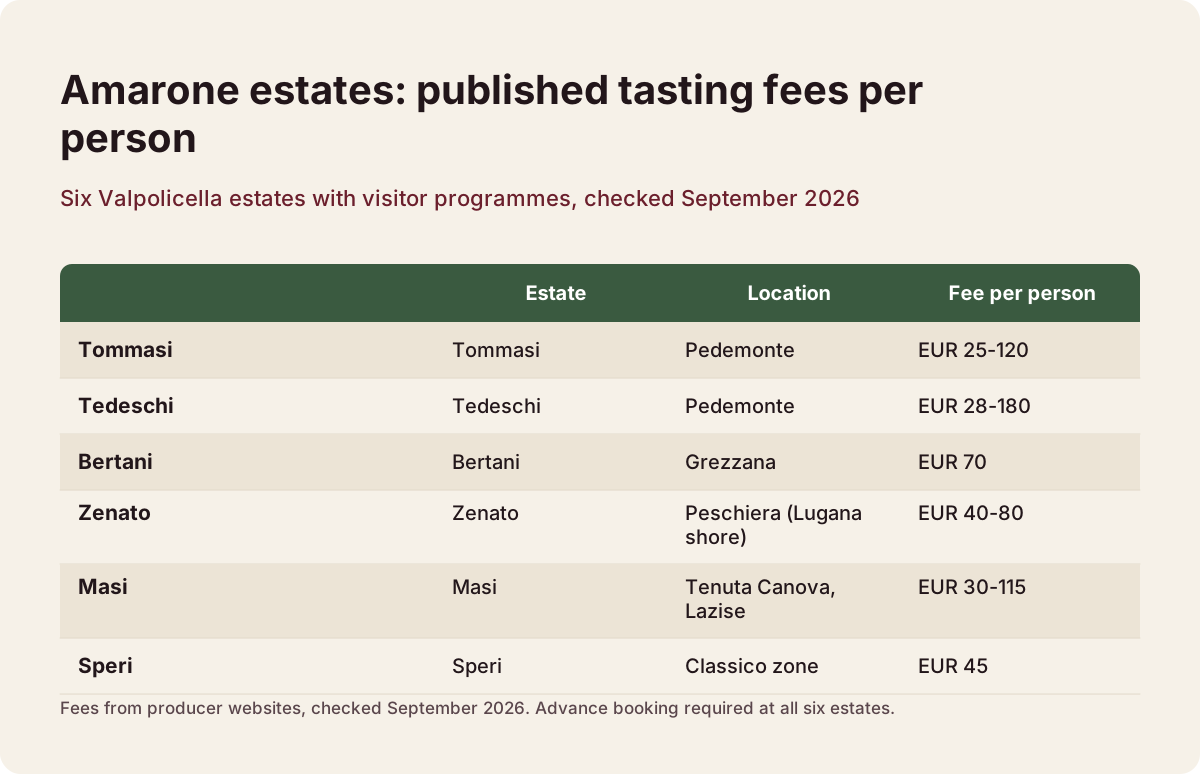
That fee range comes from the producers' own websites, and it is remarkably consistent across the zone. Tommasi, for instance, publishes a ladder from a EUR 25 basic tasting up to a EUR 120 Amarone vertical paired with chocolate (checked September 2026). Tedeschi starts at EUR 28 for a one-hour visit and climbs to EUR 180 for a two-hour vertical of labels aged over twenty years (checked September 2026). Bertani's Classico experience is EUR 70 for about two hours with a maximum of eight people, booked Wednesday to Saturday (checked September 2026). Zenato, whose cellars sit on the Lugana shore at Peschiera, charges EUR 40 for a 90-minute classic tour of four wines and EUR 80 for a two-hour premium tour of five (checked September 2026).
The important caveat is the names you will not find on any list. Quintarelli and Dal Forno, the two estates most often name-checked by collectors, do not run public visiting programmes, so no tour operator can honestly promise them either. If seeing a famous cellar matters to you, book one of the six above directly, or pick a hosted tour that names its wineries in the listing.
Two of the estates sit close together in Pedemonte, near San Pietro in Cariano, which is about 15 km and 23 minutes by car from central Verona. That makes a two-visit day realistic if you book morning and afternoon slots well apart, though a single estate plus lunch is the more relaxed pattern.
What does a cellar tour and tasting cost at each estate?
Published standard formats run from EUR 25 to EUR 80 per person across the six estates, and premium vertical or lunch formats reach EUR 100-180 (checked September 2026). Every one of them requires advance booking, and most close on Sundays.
The table below collects the published menus. Treat it as a planning range, not a promise: estates revise prices, and some formats only run on certain days.
| Estate | Location | Published formats | Fee per person |
|---|---|---|---|
| Tommasi | Pedemonte | Basic tasting EUR 25; Lugana-to-Amarone EUR 45; Trilogy EUR 50; Family Experience EUR 75; Amarone vertical with chocolate EUR 120 (checked September 2026) | EUR 25-120 |
| Tedeschi | Pedemonte | 1 h visit EUR 28; Cru tasting EUR 45; 3 h Fabriseria EUR 100; 4 h Maternigo Super Tour EUR 140; Amarone vertical EUR 180 (checked September 2026) | EUR 28-180 |
| Bertani | Grezzana | Amarone della Valpolicella Classico experience, about 2 h, max 8 people, Wed-Sat, under-18s free (checked September 2026) | EUR 70 |
| Zenato | Peschiera (Lugana shore) | Classic Tour, 4 wines, 1.5 h, EUR 40; Premium Tour, 5 wines, 2 h, EUR 80 (checked September 2026) | EUR 40-80 |
| Masi | Tenuta Canova, Lazise | Visit plus museum plus 3 wines EUR 30; 4 wines EUR 40; Amarone Costasera vertical EUR 80; wine and e-bike 3 h from EUR 115 (checked September 2026) | EUR 30-115 |
| Speri | Classico zone | 5-wine visit and tasting, about 1.5 h (checked September 2026) | EUR 45 |
A few booking norms repeat across all of them. Reservation is required for any guided visit, not a courtesy. Most estates run Monday to Saturday and close Sunday, so a weekend trip should plan winery visits for the Saturday. Tedeschi asks for advance payment on all bookings, with a full refund up to 48 hours before the visit, and groups over ten need a custom proposal (checked September 2026). Masi's Tenuta Canova on the Garda shore adds a Wine Discovery Museum to the tasting, which makes it a good pick if your travelling companions are less wine-focused.
If the winery-direct route sounds like more logistics than you want, the hosted alternative is a small-group half-day with hotel pickup in Verona: two winery visits and two tastings including Amarone and Ripasso, from around $145 per person, run by a B-Corp-certified operator and rated 4.9 across over 760 reviews (checked September 2026). It often sells out, which is worth knowing before you build your whole itinerary around it.
Whichever way you lean, compare the per-wine cost before committing. A EUR 45 estate tasting pours five wines in the producer's own cellar; a hosted half-day costs more per glass but bundles a driver, hotel pickup and a second winery, and on a short trip the difference in experience can matter more than the difference in price. These three formats span the range from a private full day to a premium Venice-departure tour to a historic cellar visit from around $42 (checked September 2026).
When can you see the grapes drying in the fruttaio?
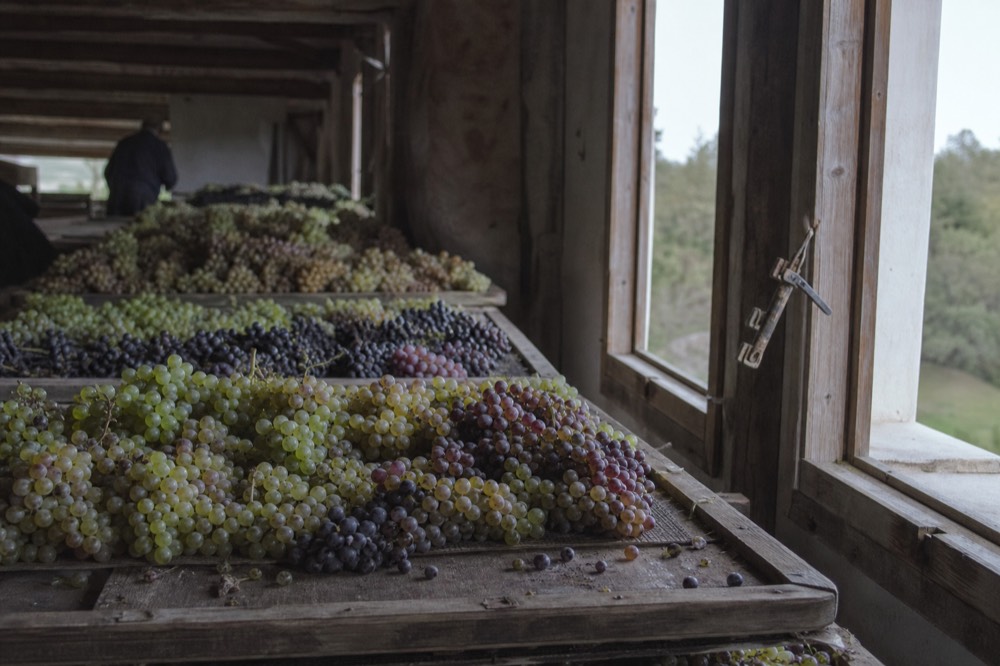
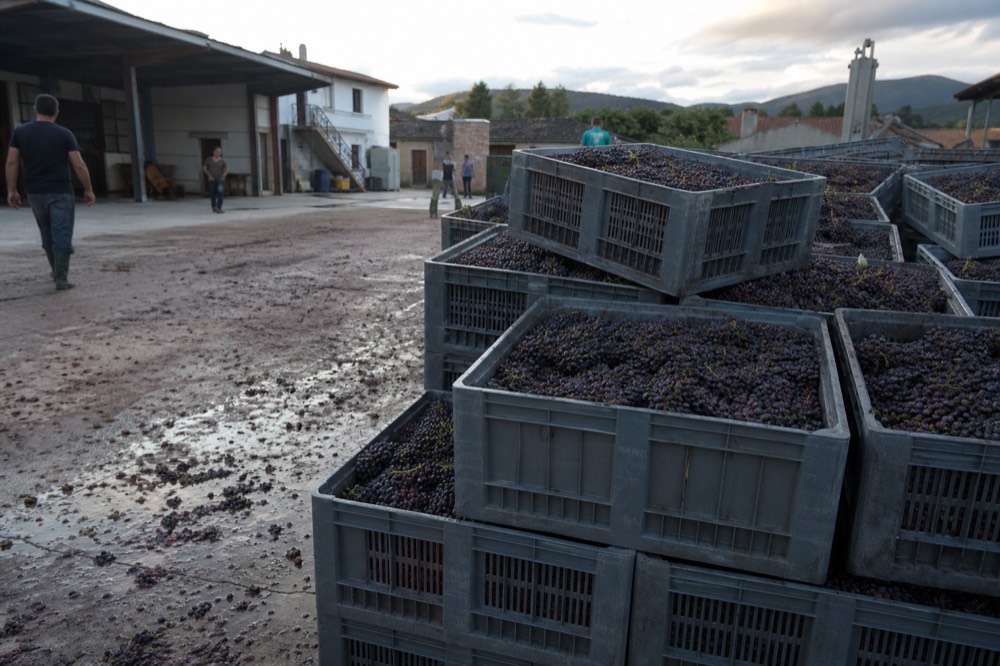
The fruttaio, the drying loft where Amarone grapes rest on racks, is full from the late-September harvest until pressing, which the DOCG forbids before 1 December, so October and November are the months when the lofts are at their most dramatic.
This is the single most photogenic and least understood part of an Amarone winery visit. The rules are fixed in the disciplinare: no more than 65% of the maximum 12 t/ha crop may be set aside to dry, the grapes must reach at least 14% natural alcohol after drying, and vinification cannot begin before 1 December, though the Veneto Region may authorise an earlier start in exceptional climate years, as it did for the 2025 harvest. In practice the grapes spend about three to four months on the racks.
Visit in high summer and you will see vineyards, barrel cellars and bottling lines, but the lofts will be empty. Visit from late September through November and you walk into a room of stacked racks, air moving through the bunches, the whole appassimento process visible at once. The 2026 harvest actually began about two weeks early, in late August, driven by summer heat and drought, with the Consorzio estimating slightly over 861,000 quintali of grapes, so the lofts in 2026 filled earlier than usual.
The Region also cut the 2026 yield cap to 10 t/ha from the 12 t/ha written in the disciplinare, by decree of 3 July 2026, and capped how much fruit could be certified for appassimento. None of that changes your visit, but it explains why producers talk about the 2026 vintage the way they do, and it is a genuine conversation starter in the cellar.
One more calendar note that belongs here rather than repeated later: the drying season is also when the zone's festivals cluster. The 2026 harvest window ran early, and events like Masi's harvest festival at Tenuta Canova on 11 September 2026 sit right at its start (checked September 2026). If your ideal day pairs a full Amarone flight with a long lunch and someone else handling the roads, the private full-day format below is the one to check first, and every listing in our roster offers free cancellation.
Do you need a car to visit the Amarone estates?
Yes for most of the six named estates, since they sit in hill villages 14 to 38 km from Verona with thin public transport, but hosted tours, e-bike rental and one historic-estate visit reachable from the city cover the same ground car-free.
The distances are short but the buses are not generous. Without a car you are at the mercy of infrequent rural bus timetables, and Italy's drink-driving law caps the day anyway: the legal limit is 0.5 g/l, with an absolute zero for drivers under 21 and anyone in the first three years of a B licence. A tasting flight at four estates adds up fast, so most visitors either hire a driver for the day or join a hosted tour.
| Destination from central Verona | Distance | Driving time |
|---|---|---|
| Negrar | 14 km | about 20 min |
| San Pietro in Cariano | 15 km | about 23 min |
| Marano di Valpolicella | 18 km | about 25 min |
| Sant'Ambrogio di Valpolicella | 21 km | about 25 min |
| Fumane | 23 km | about 26 min |
| Lazise (Masi Tenuta Canova) | 26 km | about 30 min |
| Soave | 31 km | about 28 min |
| Bardolino | 38 km | about 38 min |
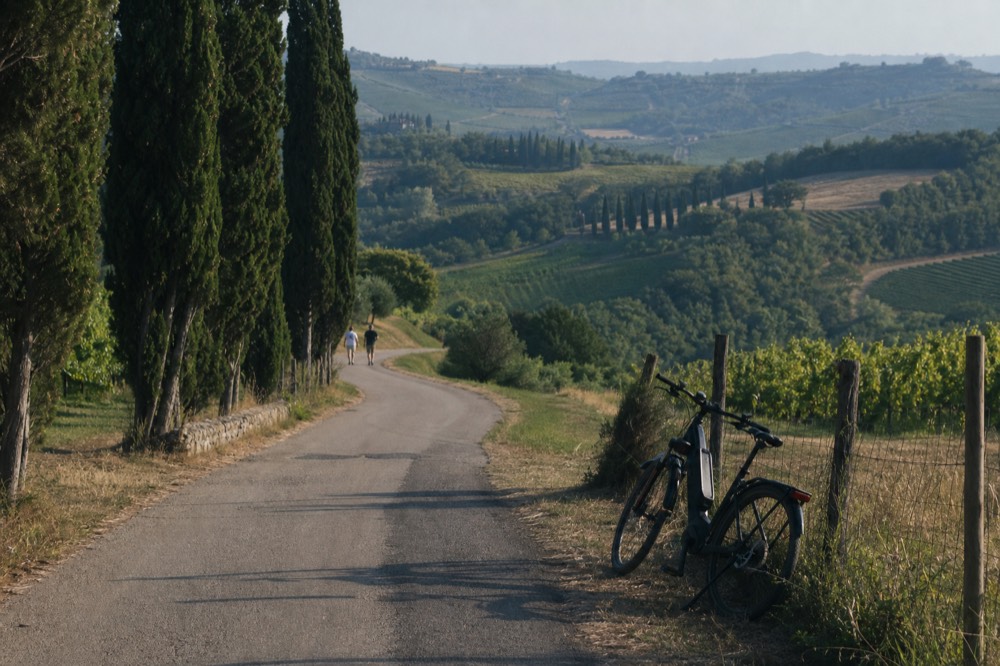
These are free-flow estimates; add time for the Verona ZTL boundary, parking and summer lake traffic. The car-free options are better than you might expect. A self-guided e-bike half-day from a Verona meeting point costs from around $110 and includes four glasses, among them an Amarone, with a cheese and salami appetizer, rated 4.8 across 82 reviews (checked September 2026). Valpo in Sella in San Pietro in Cariano rents e-bikes at EUR 35 for a half day and EUR 50 for a full day, with delivery to Valpolicella accommodations for EUR 10-20 per bike each way and a EUR 500 deposit (checked September 2026). And the cheapest cellar visit in our roster, a sommelier-led tasting at a Bertani family villa in Marano di Valpolicella, runs from around $42, though you should check the listing for the pickup option rather than assuming hotel pickup (checked September 2026).
For a deeper dive into the styles you will be tasting, our guide to Amarone itself explains the appassimento method and the DOCG rules, and Ripasso and Recioto covers the two sibling wines every cellar will pour alongside it.
Which featured tours include an Amarone flight?
Every tour in our Valpolicella roster pours at least one Amarone, but the depth differs: the cheapest historic-estate visit offers 4 or 6 wines, the small-group half-days pour the full four-style ladder, and the private full day guarantees a minimum of two Ripasso and two Amarone with a paired lunch.
This is where the winery-direct route and the hosted route genuinely diverge. A EUR 45 tasting at Speri gives you five wines in the estate's own cellar, but you arrange your own way there. A hosted tour costs more per wine but bundles transport, a driver who is not drinking, and a route that strings two or three stops together.
| Format | What you taste | Price from | Transport |
|---|---|---|---|
| Historic-estate cellar visit (Bertani family villa, Marano) | Sommelier-led tasting of 4 or 6 wines, optional cheese and charcuterie | around $42 (checked September 2026) | Check the listing for the pickup option |
| Small-group half-day from Verona | At least four Valpolicella wines: the full ladder of Valpolicella, Ripasso, Amarone and Recioto with bread, cheese and/or salami | around $105 (checked September 2026) | Hotel pickup in Verona |
| Small-group half-day, two wineries | Two winery visits, two tastings including Amarone and Ripasso | around $145 (checked September 2026) | Hotel pickup in Verona |
| Private full day from Verona | Full red-wine tastings with a minimum of two Ripasso and two Amarone, full paired lunch | from around $419, the live listing has the current figure and whether it is per person or per group (checked September 2026) | Verona meeting point |
| Premium 8-hour Amarone day | 2 cantina visits, 5 Valpolicella wines paired with cheese, trattoria lunch with antipasto, first course, dessert, wine and coffee | around $632 per person (checked September 2026) | Hotel pickup from Venice, Padua or Verona |
The private full day is the format that most closely mirrors what a serious enthusiast would build by hand: two cellars, a guaranteed depth of Amarone in the flight, and a lunch that matches the wines. It is a newer private listing with a single 5.0 review so far, a thin sample to judge by, but the structure is the point.
What is considered the best Amarone?
There is no official ranking, but the accepted producer tiers run: the historic benchmark estates Quintarelli and Dal Forno at the top, though neither accepts visits; then the large quality houses such as Tommasi, Bertani, Tedeschi, Masi and Zenato, all of which you can visit; and a strong middle tier of family estates like Speri whose wines regularly appear in blind tastings beside the famous names.
The honest answer is that "best" splits into two questions: best bottle, and best visit. For the bottle, collectors point at Quintarelli and Dal Forno, whose prices reflect a secondary market rather than any official score, and neither estate runs a public visitor programme. For the visit, the estates that combine serious Amarone with an open door are the ones in the table above, and Bertani's villa cellar, Tedeschi's hillside estate and Tommasi's hospitality wing each offer something the closed estates cannot.
A useful tiebreaker is the DOCG aging rule itself. Amarone must age a minimum of two years from 1 January after the harvest, and a Riserva at least four years from 1 November of the harvest year. Any estate pouring you a current-release Amarone is by definition pouring a wine at least two vintages back, and a vertical tasting, like Tedeschi's EUR 180 format with labels aged over twenty years, is the fastest way to understand what the aging rule actually does to the wine (checked September 2026).
The appellation's own showcase, Amarone Opera Prima, gathered 67 producers around the 2021 vintage at its 2026 edition in late January and early February, which tells you the zone's producers take the benchmark question seriously enough to taste each other publicly. The 2027 edition date is not yet published, so plan around "usually late January or early February" if you want to attend.
Which vintage of Amarone is considered the best?
No vintage is officially "the best", and we will not invent scores, but the rules of thumb are: warm, balanced vintages age longest, the DOCG means every bottle has at least two years of age before release, and a Riserva has at least four, so even the youngest wine on a tasting table has already been shaped by its vintage's weather.
What we can state factually is the calendar. The 2026 harvest began about two weeks early, in late August, after a hot, dry summer, with the Consorzio reporting favourable quality prospects especially from older pergola-trained vines and irrigated plots. The 2025 final figures came in at 57.5 million bottles across the denominations, down 3%, with Amarone and Recioto together at 13.58 million bottles, down 2.4%, so supply of the top wines is tightening slightly, not flooding.
For vintage advice in the room, ask the sommelier pouring your flight. That is the real advantage of the estate visit over the shop: the person behind the table knows which of their own vintages drank warm and which needed the full aging allowance. If the question of price versus quality is what brought you here, our piece on why Amarone is so expensive breaks down where the money goes.
How should you plan the day around the estates?
Book one estate for the morning and one for the afternoon, keep them in the same valley to limit driving, eat lunch at an agriturismo between them, and if anyone in the group is not tasting, make them the driver, because the legal limit is 0.5 g/l and zero for novice and under-21 drivers.
The geography makes this easier than it sounds. Pedemonte alone holds both Tommasi and Tedeschi, San Pietro in Cariano is 23 minutes from Verona, and Marano, home of the Bertani family villa visit, is 25. A realistic car day is Tedeschi or Tommasi at 10:00, lunch in the valley, then the villa cellar or Speri mid-afternoon, back in Verona by 18:00. In October and November, ask at booking whether the fruttaio is part of the tour, because not every estate walks visitors through the drying loft.
If you are staying in Venice rather than Verona, the calculus changes: the fast train to Verona Porta Nuova takes about 70 minutes, and an 8-hour hosted Amarone day with hotel pickup from Venice, Padua or Verona, from around $632 per person, is the premium way to do it without a car, with two cantina visits, five Valpolicella wines and a full trattoria lunch (checked September 2026) (see Is there a train from Verona to Lake Garda?).
Whatever you book, the hosted listings in our roster all offer free cancellation, so the pragmatic sequence is: lock the winery reservations first (they are the scarce item), then add the tour or transport around them. That is the planning logic we use across Verona Wine Tours, and it holds doubly in October, when the drying lofts pull visitors into the valley.
The short answers below pull together the estates' published menus, the DOCG aging and pressing rules, and the reservation norms covered in the sections above, so you can check a single fact quickly before booking a cellar visit, planning a drying-season trip, or choosing a vintage to ask for at the tasting table.
Common questions about visiting Amarone wineries
What is considered the best Amarone?
There is no official ranking. Collectors put Quintarelli and Dal Forno at the top, but neither accepts visits; the best estates you can actually tour are Tommasi, Bertani, Tedeschi, Masi, Zenato and Speri. Every bottle labelled Amarone DOCG has aged at least two years from the January after harvest, and a Riserva at least four years.
Which vintage of Amarone is considered the best?
No vintage is officially best, and there are no reliable published scores to quote. Warm, balanced years age longest; the 2026 harvest began early after a hot, dry summer and the Consorzio reported favourable quality prospects. Ask the sommelier pouring your flight which of their own vintages they prefer.
Can you visit Amarone wineries without a booking?
Almost never. Every estate with a published programme requires advance reservation, most run Monday to Saturday and close Sunday, and Tedeschi asks for advance payment with a full refund up to 48 hours before. Book before you plan anything else around the visit.
When can you see the grapes drying for Amarone?
From the harvest, usually mid-September to early October, until pressing, which the rules forbid before 1 December. October and November are the months when the fruttaio lofts are full of racked grapes. In 2026 the harvest started about two weeks early, in late August.
How much does an Amarone winery visit cost?
Standard cellar tours with tasting run about EUR 25-80 per person at the estates that publish prices, with typical formats at EUR 40-60, and premium vertical or lunch formats at EUR 100-150 (checked September 2026).
Can you drink and drive between Valpolicella wineries?
Not safely and not legally beyond very little. Italy's limit is 0.5 g/l, with an absolute zero for drivers under 21, anyone in the first three years of a licence, and professional drivers. Book a tour with a driver, hire a driver for the day, or use e-bikes on the valley's quiet roads.