Wineries Near Verona: Every Wine Zone Within an Hour of the City
Verona sits inside a ring of wine country: Valpolicella begins about 14 km north of the centre, Soave is 31 km east, and the Garda hills are under 40 km west. This guide sorts the wineries near Verona by how long they take to reach and what a visit actually costs.
Short answer
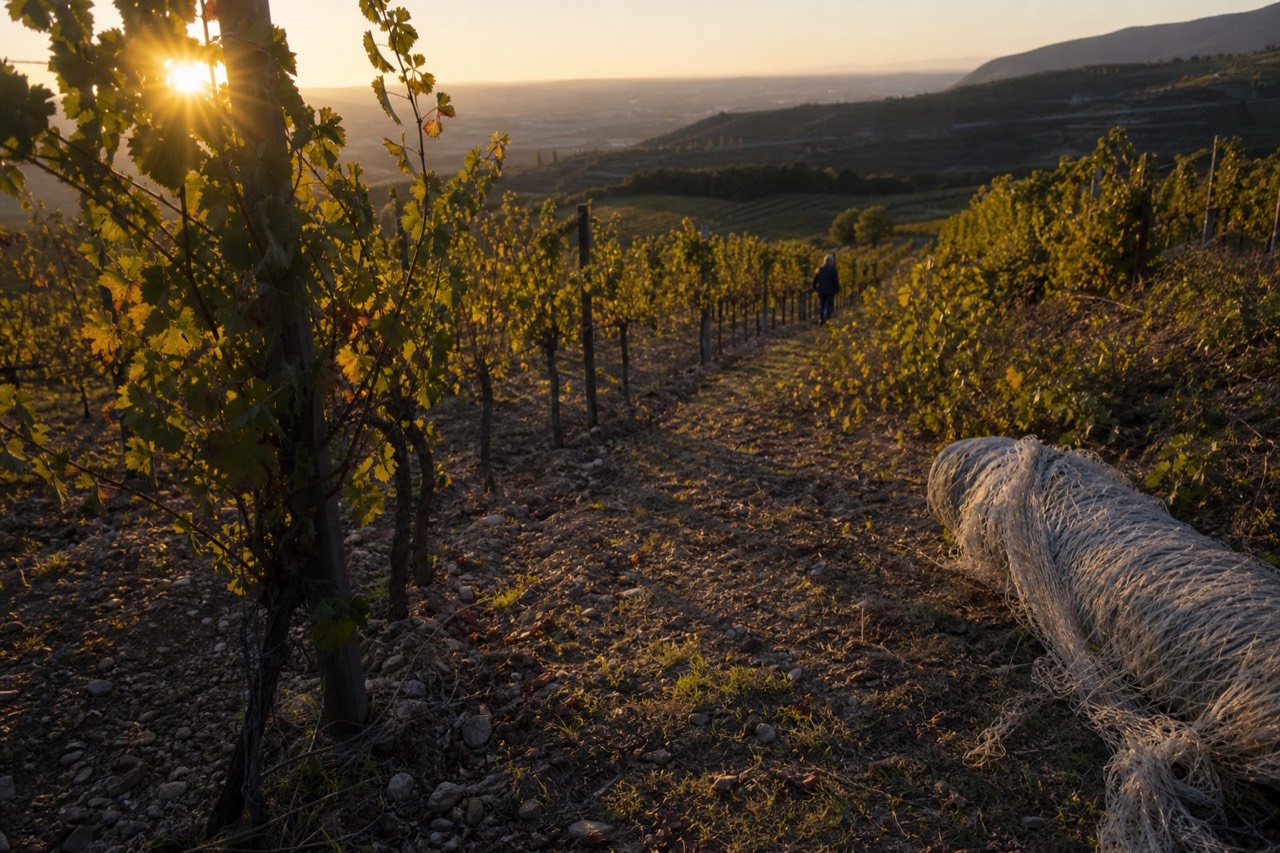
Yes, there are dozens of wineries within an hour of Verona. The closest, in Valpolicella, start about 14 km from the centre (20 minutes by car); Soave is 31 km east and Bardolino 38 km west. Standard cellar visits with tasting usually run EUR 25-80 per person, and nearly all require a reservation (checked September 2026).
Verona is one of the few Italian cities where you can be standing in a working barrel cellar less than half an hour after leaving the main square. The historic centre occupies a tight bend of the Adige, and the wine zones start almost at the edge of town: Negrar is 14 km from Piazza Bra, San Pietro in Cariano 15 km, Marano di Valpolicella 18 km. East of the city the Soave hills begin about 31 km out, and west along the lake shore Bardolino sits 38 km away.
That geography is the whole point of this guide. Rather than listing estates alphabetically, it sorts the wineries near Verona by travel time and by zone, because the practical question for most visitors is not "which winery" but "which winery can I actually reach today". The answer depends on whether you have a car, whether you are willing to drive after tasting, and whether you would rather let a tour operator handle the roads. This is the approach Verona Wine Tours takes across the whole site: distance first, then zone, then the specific estates and bookable products that fit the time you have.
Are there wineries near Verona?
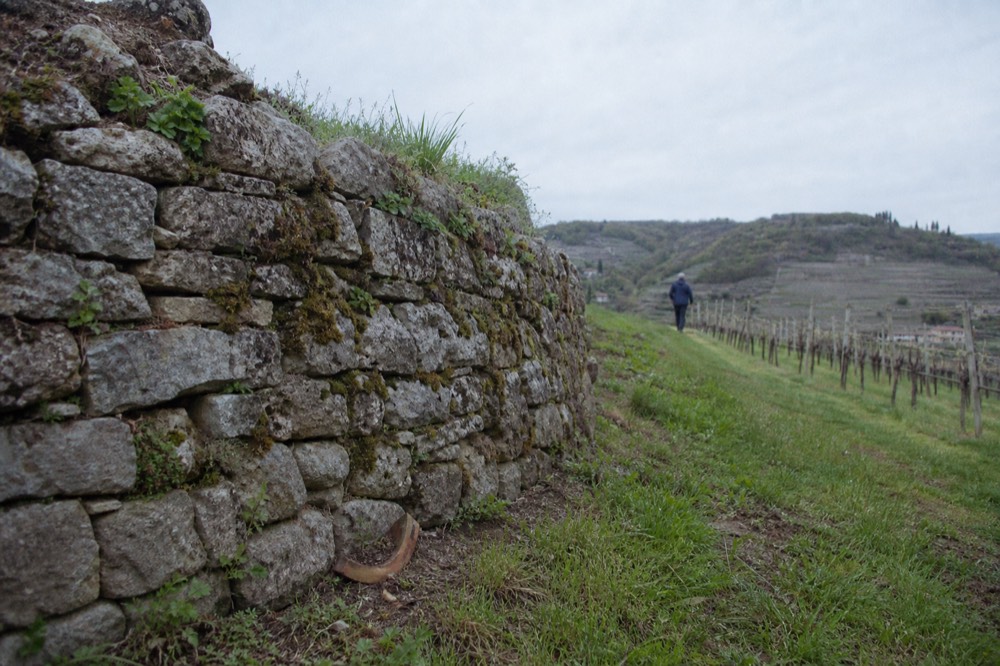
Yes, and in unusual density: four separate DOC and DOCG zones lie within about 40 km of the centre, with the first cellar doors starting roughly 20 minutes away by car, and the closest cluster, Valpolicella, holding the majority of bookable visits. Valpolicella, the Amarone country north of the city, holds the closest cluster. Valpantena, a named sub-zone of Valpolicella, reaches almost into the eastern suburbs. Soave lies east beyond the Lessini hills, and the Bardolino and Lugana zones flank the south-east shore of Lake Garda. Few Italian cities of comparable size sit inside such a tight ring of distinct denominations.
The Valpolicella zone alone covers about 8,600 hectares of vineyard run by more than 2,200 companies, according to the Consorzio per la Tutela dei Vini della Valpolicella. Not all of those receive visitors: some are grower cooperatives, some supply grapes to larger houses, and a handful of the most famous names, Quintarelli and Dal Forno among them, have no walk-in programme at all. The estates that do welcome the public cluster along the valley roads through Negrar, Fumane, Marano, Sant'Ambrogio and San Pietro in Cariano, the five communes that make up the historic Classico zone.
What surprises many first-time visitors is how close "close" really is. The Valpolicella Classico boundary sits closer to Verona's centre than many of the city's own suburbs, and the hills are visible from the upper terraces of the Roman Arena on a clear day. This is why the question of driving matters so much: the distances are short enough that a half-day outing is genuinely a half-day, but the Italian drink-driving limit of 0.5 g/l still applies, and a full tasting at three estates can put a driver over it (see What are the big 3 Italian wines?).
Which wineries can you reach in 20 minutes from Verona?
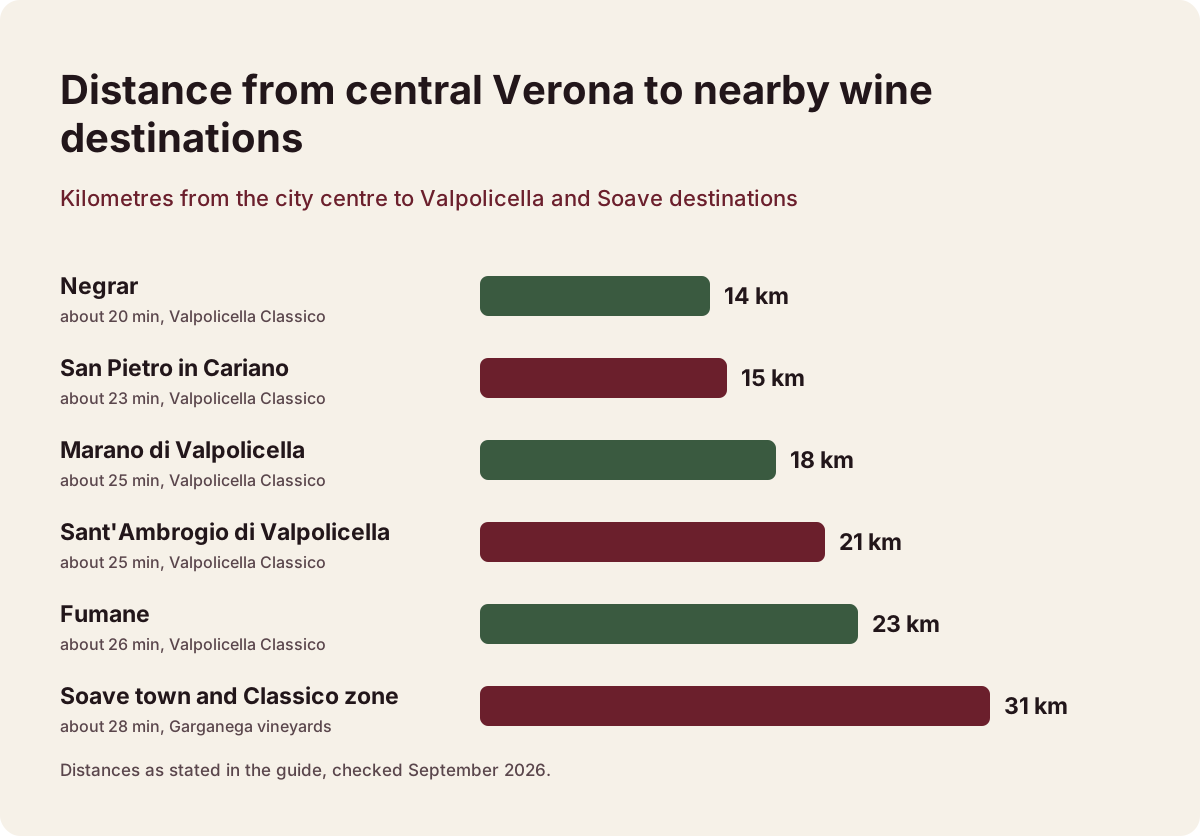
The 20-minute ring is Valpolicella's front row: Negrar at 14 km, San Pietro in Cariano at 15 km and Marano di Valpolicella at 18 km from central Verona, with Sant'Ambrogio and Fumane just beyond at 21 and 23 km respectively. These are the estates closest to the city, and they include several of the zone's most bookable names, most of them inside the historic Classico zone. Drive times are free-flow estimates, so add margin for the Verona ZTL boundary, parking and summer traffic before you promise anyone a precise arrival time.
| Destination | Distance from central Verona | Drive time | Zone |
|---|---|---|---|
| Negrar | 14 km | about 20 min | Valpolicella Classico |
| San Pietro in Cariano | 15 km | about 23 min | Valpolicella Classico |
| Marano di Valpolicella | 18 km | about 25 min | Valpolicella Classico |
| Sant'Ambrogio di Valpolicella | 21 km | about 25 min | Valpolicella Classico |
| Fumane | 23 km | about 26 min | Valpolicella Classico |
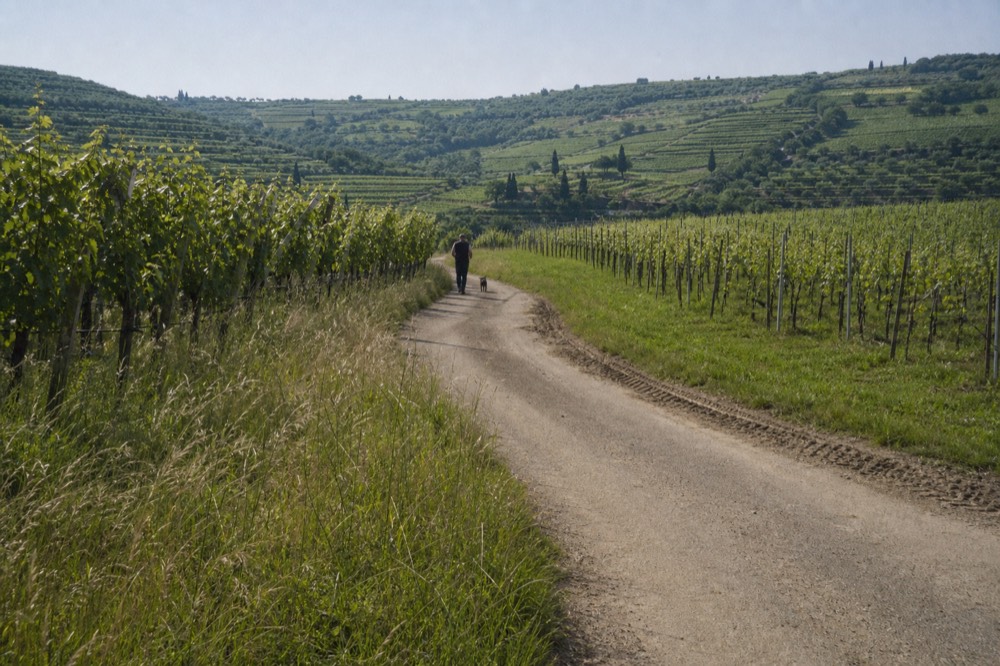
In San Pietro in Cariano, Tommasi runs a hospitality programme with a published tasting ladder starting at EUR 25 for a basic cellar passaggio and rising to EUR 120 for a vertical Amarone tasting with chocolate (checked September 2026). Tedeschi, in nearby Pedemonte, charges EUR 28 for a one-hour visit and tasting, EUR 45 for a cru-focused tasting, and up to EUR 180 for a two-hour Amarone vertical; the estate requires advance payment and gives a full refund up to 48 hours before the visit (checked September 2026). Bertani's Valpolicella Classica tour at the Grezzana estate runs about two hours, is capped at eight people, costs EUR 70 per person with children under 18 free, and is bookable Wednesday to Saturday (checked September 2026).
These figures sit inside a wider pattern: across Valpolicella, a standard cellar tour with tasting usually runs EUR 25-80 per person, with EUR 40-60 the typical middle of the range, and premium, vertical or lunch formats reaching EUR 100-150. Reservation is the norm rather than the exception, and most estates receive visitors Monday to Saturday only.
If you would rather not drive at all, the closest wine zone also works under pedal power. A self-guided e-bike half-day from a Verona meeting point includes four glasses covering the Valpolicella ladder, including Amarone, plus a cheese and salami appetizer, and it often sells out in high season. The same operator-free logic applies to a small-group half-day with hotel pickup that walks you through the four Valpolicella styles side by side.
Between them, those three options cover the main ways to visit the near ring: under your own power on an e-bike, at a winery-direct tasting room in the hills just above the city, or on a guided small-group circuit with transport. All three are bookable from Verona without a car.
Does Verona have vineyards you can see without leaving the hills?
Yes, the hills directly above Verona carry working vineyards, and one of the easiest visits in the whole region is a family cantina in those hills, reachable in under half an hour and pouring the full local ladder from a white IGT through Valpolicella and Ripasso to Amarone. The city's own eastern and northern slopes, technically part of the wider Verona IGT and Valpolicella fringe, host small estates that pour the full local ladder: a white IGT, Valpolicella, Valpolicella Superiore, Ripasso and Amarone. For anyone without a car or a full day, this hillside tier is the shortest path from hotel to tasting glass that the region offers.
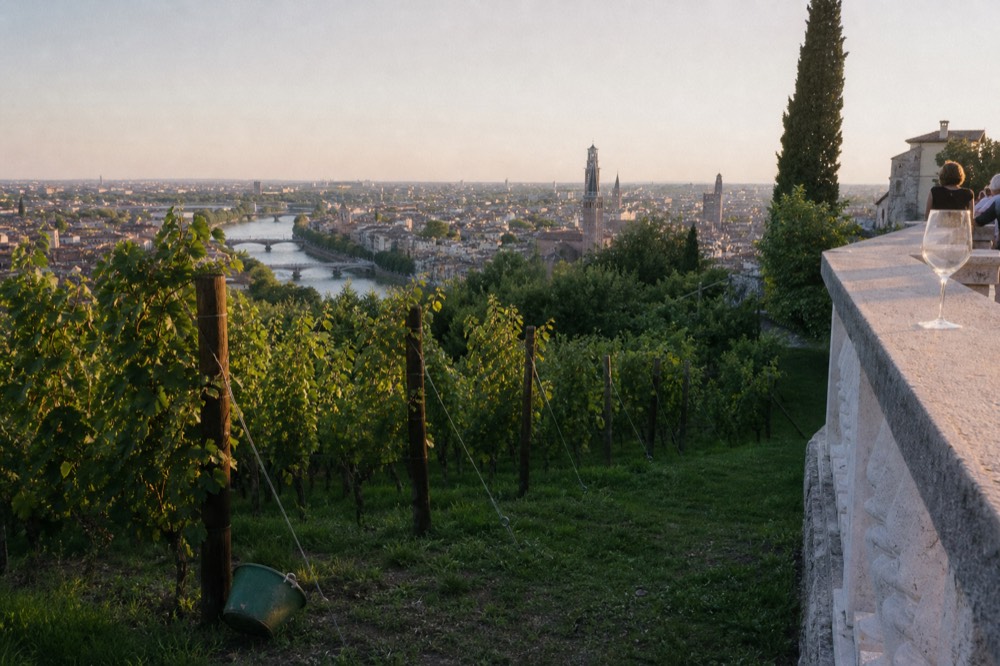
One such winery-direct tasting pours five wines with a cold-cuts and cheese platter against a panoramic view over the plain, from $53, in a 90-minute format capped at 20 guests; you meet at the winery, so transport is your own arrangement (checked September 2026). It carries a 4.9 rating across 279 reviews and shows a "popular pick" label on its listing, which reflects demand but is not the same as a verified sell-out warning.
This hillside tier matters for anyone on a tight schedule. A morning in the Arena, an early lunch, and a mid-afternoon tasting in the hills above the city is a realistic single day, because the winery is not out in the Valpolicella valleys but on the slope you can see from town. For travellers pairing wine with a city break, this is the format that fits.
The self-guided e-bike format also uses this near-hills geography. It starts from a meeting point in Verona itself, rolls out through the immediate hill country, and includes four glasses with an appetizer plate, from $110 (checked September 2026). It runs as a self-guided route rather than a guided tour, so you set the pace and stop where the route suggests.
For more on the wines you will meet in these hills, the four-style ladder from basic Valpolicella to Recioto is explained in detail in our guide to Valpolicella wine and its four styles.
Which wineries sit 40 minutes out: Soave and the eastern hills?
Soave begins 31 km east of Verona, about 28 minutes by car, and its walled medieval town plus terraced Garganega vineyards make it the most distinctive day trip in the eastern ring, with winery-direct visits from $34 and family estates in the Classico zone charging EUR 27-42 for a tasting. (checked September 2026) The Soave DOC covers about 4,700 hectares, with roughly 40 million bottles of potential production and 45 percent exported to 60-70 markets, per the Consorzio Tutela Vini Soave. It is the only one of the four zones where the dominant grape is a white, Garganega, and the landscape shifts from the broad Valpolicella valleys to steep terraces.
| Eastern destination | Distance from central Verona | Drive time | What you find |
|---|---|---|---|
| Soave town and Classico zone | 31 km | about 28 min | Garganega vineyards, Castello di Soave, family cantine |
| Monteforte d'Alpone | within the Soave zone | a few minutes beyond Soave | The other Classico commune, quieter tasting rooms |
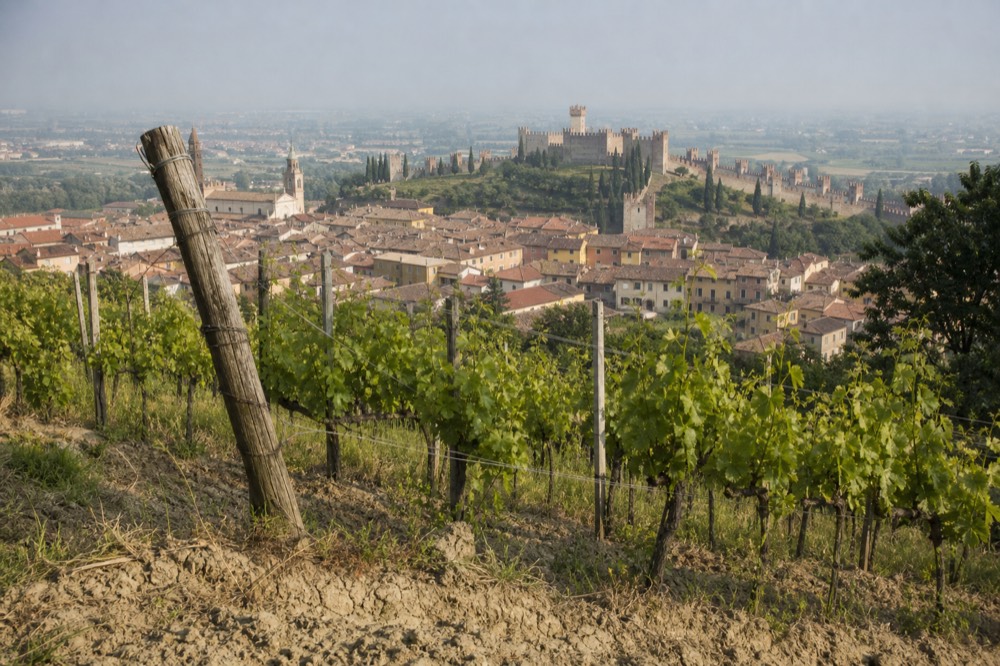
A winery-direct visit in Soave offers something the Valpolicella estates cannot: a walk through terraced vineyards, a barrel cellar, and a sensorial tasting of four organic wines with cured meats, cheese and baked appetizers, from $34, the cheapest product in the whole regional set; you meet at the winery, as there is no transport included (checked September 2026). It has 17 reviews so far at a 4.9 rating, a young listing with a strong start (checked September 2026). Coffele, a family estate in Soave town, lists tastings at EUR 27 and EUR 42 per person (checked September 2026).
The Soave zone is in the middle of a structural change worth knowing about before you visit. Under the Progetto Identità Soave approved by the consorzio assembly in March 2026, the surface that may be claimed as plain Soave DOC is halved from the 2026 harvest, and the consorzio requested yield cuts to 13.5 t/ha for the DOC and 12.5 t/ha for Classico and Colli Scaligeri. The aim is to push volume down and quality up, which means the Soave you taste over the next few vintages will come from a deliberately tightened production base.
If you want both valleys in one outing, only one product from Verona covers Soave and Valpolicella in a single half-day: a small-group tour with two tasting sessions, one in each zone, with hotel pickup, from $170 (checked September 2026). It is a newer, lightly reviewed listing, so judge it on its itinerary rather than its review history.
Planning a Soave visit in detail, including the castle hours and the September grape festival, is covered in our Soave wine tour guide.
Which wineries are within 60 minutes: the Garda shore?
West and north-west, the Bardolino zone begins at Lazise, 26 km from Verona, with Bardolino itself at 38 km, and the Lugana zone just across the lake's south-east corner; all sit within an hour's drive, and the zone turned out 21 million bottles from the 2025 harvest. Bardolino DOC covers 2,400 hectares, of which 1,000 are planted for Chiaretto, and the consorzio counted 21 million bottles from the 2025 harvest, split almost evenly between Bardolino and Chiaretto. The lake shore adds a second wine culture to the region: lighter reds, rosés and the Turbiana-based whites of Lugana.
| Garda-side destination | Distance from central Verona | Drive time | Zone |
|---|---|---|---|
| Lazise | 26 km | about 30 min | Bardolino DOC |
| Bardolino | 38 km | about 38 min | Bardolino DOC / Chiaretto |
| Peschiera del Garda | a few minutes beyond Lazise | about 35-40 min | Lugana DOC (Verona side) |
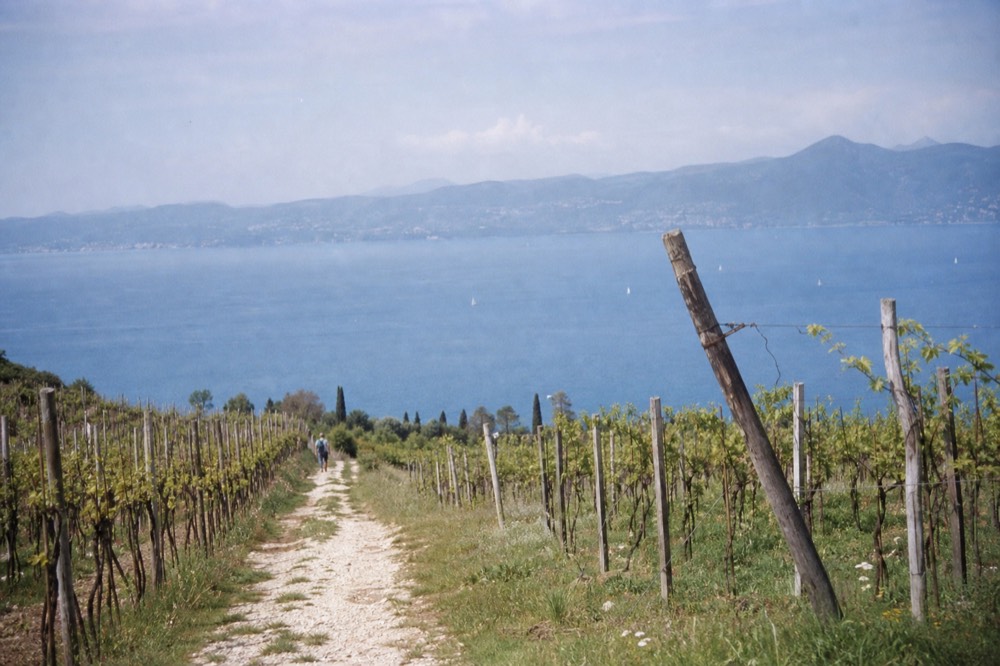
The cheapest guided Lake Garda option is a winery-direct visit in the Garda hills above Bardolino: a vineyard walk, cellar visit, four wines, cold cuts, cheeses and bruschetta, from $52, with the meeting point at the winery and no transport included (checked September 2026). It carries a 4.8 rating across 155 reviews. Zeni's wine museum in Bardolino town is free for individuals, up to 10 people, open Monday to Saturday 09:30-12:30 and 14:00-19:00 in the summer season, with Sunday hours of 09:00-13:00 (checked September 2026).
Lugana, the Turbiana-based white zone straddling the Brescia and Verona provinces, adds a different flavour profile to the lake ring. It covers 2,600 ha cultivated by 214 growers, exports over 60 percent of production to 65 countries, and turned out over 27.5 million bottles in the last counted vintage, with an average shelf price of EUR 9.10 per bottle. From the lake itself, a historic boat cruise from Sirmione pairs a Lugana-shore tasting with snacks, from $116, departing the Sirmione meeting point with no hotel pickup, minimum numbers applying, and it often sells out (checked September 2026).
For travellers already staying at the lake rather than in Verona, one shared half-day runs from Peschiera del Garda, Bardolino and other lake points into Valpolicella for a cellar visit, red-wine tastings and an agriturismo lunch, from $103 (checked September 2026). It is the only Valpolicella product in the set that departs from Lake Garda.
The Garda wine zones are unpacked further in our Lake Garda wine tour guide, which covers Bardolino, Chiaretto and Lugana in detail.
How do you choose between driving, e-biking and a tour?
Drive if you want to set your own itinerary and have a designated driver; e-bike if your target is the near Valpolicella ring; take a tour if you plan to taste properly, because Italy's 0.5 g/l blood-alcohol limit makes a multi-stop day incompatible with driving, and the zero-limit categories are stricter still. The law is stricter than many visitors expect: drivers under 21, those in the first three years of a category B licence, and professional drivers face a zero limit, and fines in the 0.5-0.8 band run EUR 543-2,170 with a three to six month licence suspension. That arithmetic, not the distances, is what usually settles the question.
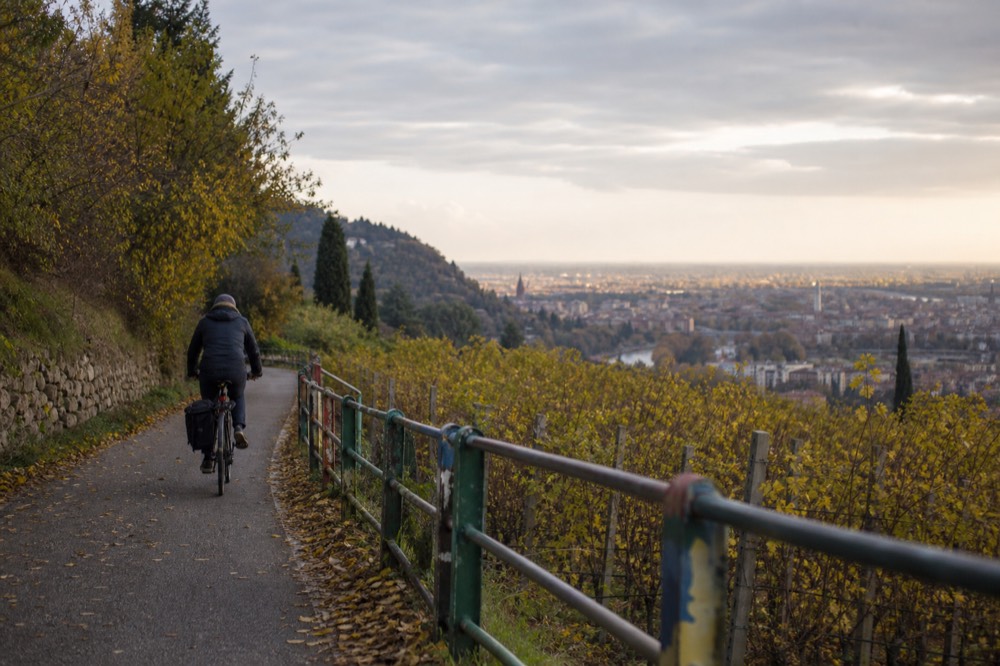
E-bike rental in San Pietro in Cariano costs EUR 35 for a half day and EUR 50 for a full day, with a EUR 500 deposit and delivery to local accommodation for EUR 10-20 per bike one way (checked September 2026). That puts the Valpolicella hills within reach of anyone reasonably comfortable on a bike, since the motor flattens the climbs. The self-guided tour format bundles the bike logistics, the route and a tasting stop into one booking.
A small-group tour solves the driving question entirely. The classic half-day from Verona with hotel pickup visits two wineries with two tastings including Amarone and Ripasso, from $145, and it often sells out (checked September 2026). The cheapest cellar visit in the set is a sommelier-led tasting at a historic Bertani family villa in Marano, from $42, though you should check the listing for the pickup option rather than assuming hotel collection (checked September 2026).
Which estates are on bookable tours, and which need your own arrangement?
The estates reachable through bookable shared or private products are concentrated in Valpolicella and the Garda hills, while Soave's bookable options are winery-direct, and the most famous Amarone names, Quintarelli and Dal Forno among them, receive no walk-in visitors at all. This distinction decides your day before you leave the hotel: whether you book a product that bundles transport and tastings, or arrange your own visit at an estate that expects you to arrive under your own steam. The table below shows the main bookable formats side by side.
| Product type | What it covers | From price | Transport |
|---|---|---|---|
| Small-group half-day, Verona | 2 wineries, 2 tastings incl. Amarone and Ripasso | from $145 (checked September 2026) | hotel pickup |
| Small-group half-day, four styles | Full Valpolicella ladder with bread, cheese and/or salami | from $105 (checked September 2026) | hotel pickup |
| Historic estate cellar tour, Marano | Sommelier-led tasting of 4 or 6 wines | from $42 (checked September 2026) | check the listing for the pickup option |
| Winery-direct tasting, hills above Verona | 5 wines, cold-cuts and cheese platter, panoramic view | from $53 (checked September 2026) | meet at the winery |
| Winery-direct tasting, Soave | Terraced-vineyard walk, cellar, 4 organic wines, platter | from $34 (checked September 2026) | meet at the winery |
| Winery-direct visit, Garda hills | Vineyard walk, cellar, 4 wines, cold cuts, cheeses, bruschetta | from $52 (checked September 2026) | meet at the winery |
| Self-guided e-bike half-day, Verona | 4 glasses incl. Amarone, cheese and salami appetizer | from $110 (checked September 2026) | from a Verona meeting point |
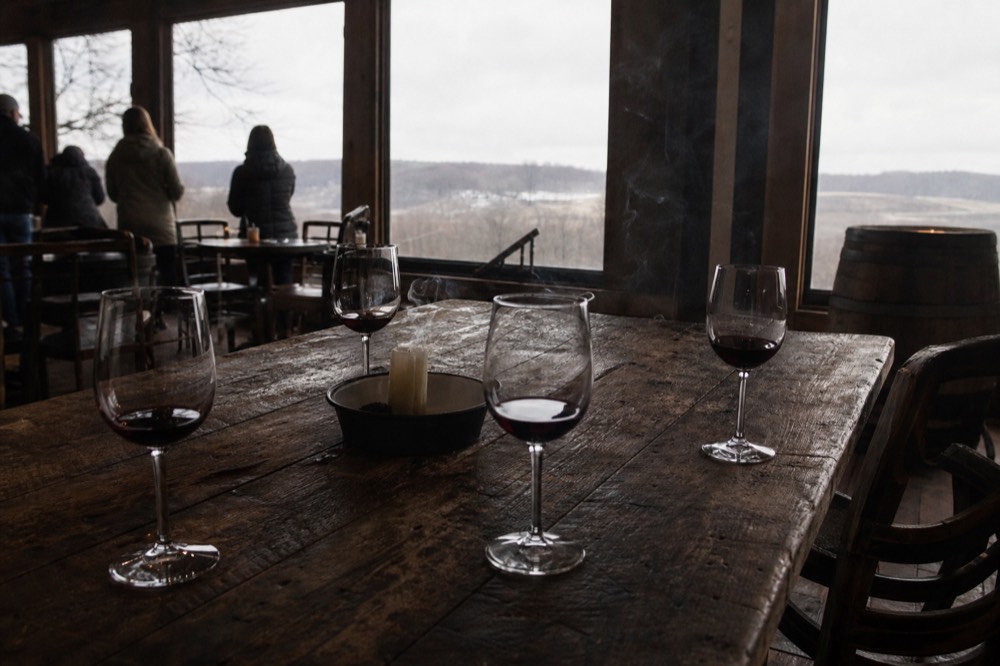
The four-styles half-day is the one to name when the point of the visit is understanding the ladder from Valpolicella through Ripasso and Amarone to Recioto, rather than simply drinking well. It carries a 4.8 rating across 146 reviews and often sells out (checked September 2026).
At the premium end, private products cover the same geography with more depth and more money. A private full day from a Verona meeting point includes full red-wine tastings with a minimum of two Ripasso and two Amarone, plus a paired lunch; it is a newer private listing, and pricing runs from around $419, with the live listing carrying the current figure and whether it is per person or per group (checked September 2026). From Venice, a private 8-hour day visiting two family wineries, one in Soave and one in Valpolicella, with a light lunch, runs from around $280 with the same per-person or per-group caveat on the listing (checked September 2026), and the premium from-Venice Amarone day with hotel pickup, two cantina visits and a trattoria lunch runs from $632 per person, the most expensive product in the set (checked September 2026).
What should you know before booking any winery visit near Verona?
Reserve ahead, expect Monday-to-Saturday hours at most estates, budget EUR 25-80 for a standard visit, and do not plan to drive after more than one stop; those four rules cover almost every practical failure mode of a Verona wine day. The reservation norm is the one that catches the most people out, because the region looks like casual wine country while functioning, at the better estates, on booked calendars. Add the Sunday closure pattern and the harvest-season schedule changes, and a little planning goes a long way.
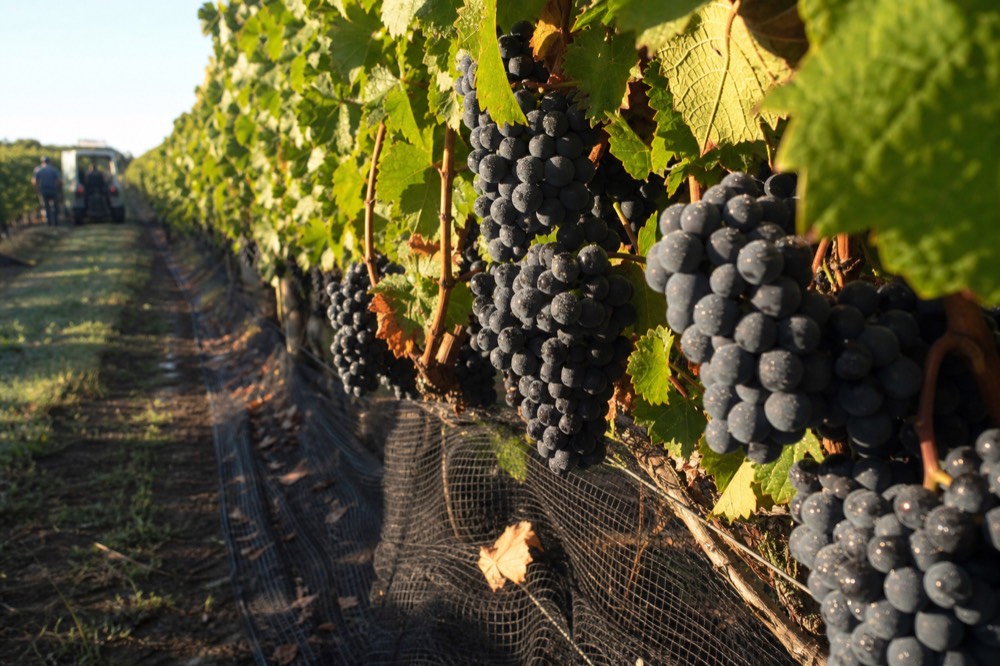
Timing matters too. The harvest window for Corvina, Corvinone and Rondinella usually runs mid-September to early October, and the 2026 picking in Valpolicella started about two weeks early, in late August, after a hot, dry summer. Some estates suspend visits or run reduced schedules during vendemmia, so a September or October trip should confirm the visit a little closer to the date. The drying season that follows, when grapes for Amarone rest in ventilated rooms until pressing, is not before 1 December under the production rules, roughly three to four months of appassimento.
Sunday is the weakest link in any itinerary. Most Valpolicella estates receive visitors Monday to Saturday, Sunday visits are uncommon, and the winery-direct options that do run on Sundays are the exception rather than the rule. A Sunday wine day near Verona is best built around a bookable shared tour, which runs to its own calendar, or a lake-side visit such as the Bardolino wine museum, whose summer Sunday hours run 09:00-13:00 (checked September 2026).
For a deeper look at the estates worth naming in Valpolicella specifically, our guide to the Amarone wineries to visit goes zone by zone through that cellar country.
The short answers: yes, there are dozens of wineries near Verona, the closest start about 20 minutes from the centre, standard visits usually cost EUR 25-80 per person with a reservation, and you can reach several zones without a car at all. The details below expand on each of the questions visitors ask most often, from the closest wine region to the cost of a tasting and the car-free options.
Common questions about wineries near Verona
Are there wineries near Verona?
Yes, dozens of them, and unusually close: the first Valpolicella cellar clusters start about 14 km from the centre, roughly 20 minutes by car, and four DOC and DOCG zones, Valpolicella, Soave, Bardolino and Lugana, all lie within about an hour of the city.
Does Verona have vineyards?
Yes. Working vineyards sit on the hills directly above the city, and the Valpolicella Classico zone begins roughly 20 minutes from the centre. The wider Valpolicella zone covers about 8,600 hectares of vineyard.
How much does a winery tasting near Verona cost?
A standard cellar tour with tasting usually runs EUR 25-80 per person, with EUR 40-60 typical; premium, vertical and lunch formats reach EUR 100-150 (checked September 2026). Bookable shared tours run from about $42 to $145 depending on format.
Do you need a reservation for wineries near Verona?
Almost always. Reservation is the norm at Valpolicella estates, most receive visitors Monday to Saturday only, and some, such as Tedeschi, require advance payment with a full refund up to 48 hours before the visit (checked September 2026).
Can you visit wineries near Verona without a car?
Yes. Options include a self-guided e-bike half-day from a Verona meeting point, small-group tours with hotel pickup, and winery-direct tastings reachable by taxi or regional train plus a short ride.
Which is the closest wine region to Verona?
Valpolicella. Negrar is 14 km from central Verona, San Pietro in Cariano 15 km, and Marano di Valpolicella 18 km, all about 20-25 minutes by car.